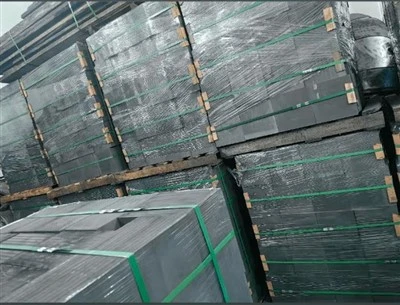
Graphite Cube Stock Blocks for Precision Tooling
Product Overview
Looking at the geometry, a solid, equal-sided graphite block cut from a larger isostatically pressed billet, with six flat machined faces and sharp but lightly eased edges. This is not decorative: each face and opening supports the way the part it acts as a starting blank that machinists and EDM operators mill, sink, or tur, and the proportions are chosen so the component stays rigid rather than flexing under load.
In the setting where tool shops keep a range of cube sizes on the shelf so a new electrode or fixture can be started immediately without waiting for a custom casting, the practical benefits are concrete. Operators spend less time adjusting and re-fixturing because the graphite part already carries the locating features, and the surrounding process can be standardised around a single known component instead of a collection of improvised pieces.
Its working role is straightforward: it acts as a starting blank that machinists and EDM operators mill, sink, or turn into electrodes, small dies, and compact tooling. Graphite is chosen because it holds strength at temperatures where metals soften, conducts heat and current evenly, and resists wetting by most molten metals, so the part stays dimensionally stable through repeated cycles. Jincheng can reproduce it from a drawing or sample, adjust dimensions, or refine features based on how it wears in service, and each unit is checked before packing.
Key Features and Design Details
- Equal-sided geometry simplifies fixturing in a vise or chuck
- Uniform grain in all directions keeps electrode wear even
- Pre-cut faces reduce roughing time on the first setup
- Available in fine, medium, and coarse grain to match surface finish needs
- CNC machined to hold repeatable tolerances on every order
Technical Specifications
| Graphite material | isostatic, molded, or extruded to suit the duty |
|---|---|
| Density | 1.65 - 1.82 g/cm3 |
| Ash level | 0.05% - 0.3%; high-purity option |
| Resistivity | 9 - 15 micro;ohm·m |
| Bending strength | 30 - 60 MPa |
| Crushing strength | 65 - 130 MPa |
| Hardness | 45 - 70 HSD |
| Heat conductivity | 70 - 130 W/m·K |
| Expansion | 3.5 - 5.5 x 10⁻⁶ /K |
| Temperature limit | up to 3000 deg;C in vacuum or inert gas |
| Porosity | 8% - 15%; impregnation optional |
| Structural role | balanced grade for tooling |
| Tolerance | down to +/-0.02 mm |
| Surface | Ra 1.6 - 6.3 microm; polishing optional |
Applications and How to Use
Two design points deserve emphasis. First, equal-sided geometry simplifies fixturing in a vise or chuck. Second, uniform grain in all directions keeps electrode wear even. Together these account for much of the component's repeatability, and they are the features that should be checked first when a process begins to drift.
On first use, seat the part on a clean flat support, ramp the temperature gradually to remove any residual moisture, and handle it with soft tools to protect the finished edges. In service, avoid concentrated point loading and keep the working surfaces clean, checking carefully between cycles for edge chips or surface deposits.
Material Grade Selection and Quality Control
Fine-grain isostatic material gives the smoothest, least porous surface for precision work, molded material balances cost and strength for general duties, and extruded material suits larger structural pieces. Impregnation or coating lowers porosity in oxidising conditions, and high-purity low-ash grades are used where contamination must be avoided. The choice for this component is tied to the conditions described above, tool shops keep a range of cube sizes on the shelf so a.
The loading and unloading routine is kept simple so operators can repeat it without special tooling, and the working surfaces are designed to be inspected in a few seconds between runs.
Service life is driven as much by operating discipline as by the material itself. Controlled ramp rates, correct atmosphere, and avoiding sudden air exposure at high temperature all reduce oxidation and thermal stress. When a part is eventually retired, reviewing the wear pattern alongside the operating records usually points to a simple adjustment that extends the next one, and Jincheng supports that review rather than simply supplying a replacement.
Why Choose Jincheng
- Equal-sided geometry simplifies fixturing in a vise or chuck, delivered as a standard production capability
- Uniform grain in all directions keeps electrode wear even, delivered as a standard production capability
- Pre-cut faces reduce roughing time on the first setup, delivered as a standard production capability
- Direct factory production with flexible quantities and clear lead times
- Engineering review of drawings to catch design and machining issues early, and ongoing application support after delivery
Frequently Asked Questions
Can the dimensions be changed?
Yes. Most orders follow customer drawings, so the Graphite Cube Stock Blocks for Precision Tooling can be produced with custom sizes, holes, and tolerances.
How is the grade decided?
It is matched to the operating conditions for this component and a specific grade is recommended before production.
What is the lead time?
Lead time depends on quantity and complexity and is confirmed when the order is accepted, with repeat parts scheduled in advance.
How should it be stored?
Keep it dry, clean, and covered, handle gently to protect edges, and clean only with soft or approved methods.
Is inspection documentation available?
Every part is inspected before shipment, and dimensional or material reports can be supplied on request so the component can be checked against its specification.
Hot Tags: graphite cube stock blocks for precision tooling, China graphite cube stock blocks for precision tooling manufacturers, suppliers, factory, compacted graphite iron block, graphite block for conductive heating, graphite block for induction furnace, graphite block furnace use, graphite block plate, graphite block slab