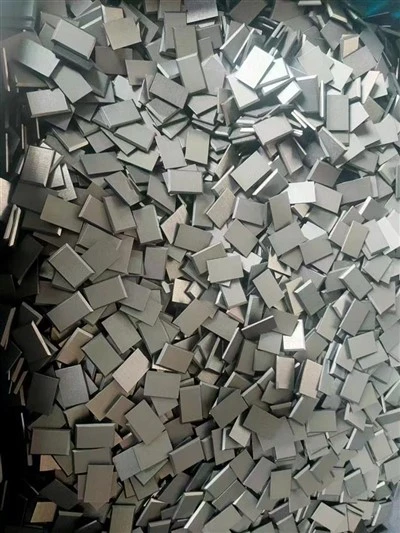
Graphite Fuel Cell Electrode for PEM & Phosphoric Acid Stacks
Jincheng graphite fuel cell electrodes are porous conductive components used in proton exchange membrane, phosphoric acid and specialized electrochemical cell stacks, providing current collection, gas transport and reaction-site support between the bipolar plate and catalyst layer. Produced from high-purity graphite materials with controlled porosity and surface characteristics, each electrode supports uniform gas distribution and reliable electron transfer while maintaining compatibility with membrane and catalyst assemblies.
The electrode structure balances electrical conductivity, gas permeability and mechanical integrity, with material grades and porosity levels tailored to stack design, operating temperature and fuel chemistry. High-purity low-metal formulations reduce contamination risk in sensitive electrochemical reactions, while flexible graphite and rigid porous constructions can be specified according to cell architecture and compression requirements. Custom dimensions and electrode profiles are available for research stacks, prototype systems and production fuel cell modules.
Jincheng supplies high-purity graphite electrodes and related conductive components with material documentation for carbon purity, porosity and dimensional properties. Our engineering team supports material selection and prototype development for fuel cell manufacturers, research laboratories and clean energy system integrators working toward stable, repeatable electrochemical performance.
Electrode Characteristics
- High-purity graphite minimizes metallic and ionic contamination in sensitive fuel cell reactions.
- Controlled porous structure supports uniform reactant gas distribution and water management.
- High electrical conductivity reduces contact resistance and ohmic losses across the stack.
- Corrosion-resistant carbon structure withstands the electrochemical environment over cycling.
- Flexible and rigid material forms match different cell compression and assembly designs.
- Custom thickness and profile options for prototype, research and production stack formats.
- Stable dimensions under compression preserve gas pathways and electrical contact.
Material and Property Reference
| Parameter | Rigid Porous Electrode | Flexible Graphite Electrode |
|---|---|---|
| Material Form | High-purity porous graphite | Expanded flexible graphite |
| Carbon Purity | ≥99.5% standard, ≥99.9% high purity | ≥99% standard, ≥99.9% high purity |
| Bulk Density | 0.6-1.3 g/cm³ | 0.8-1.4 g/cm³ |
| Porosity | 30-70% controlled | Compressible structure |
| Electrical Resistivity | Low through-plane resistance | High in-plane conductivity |
| Thickness Range | 0.5-10 mm | 0.2-5 mm |
| Typical Area Size | 10×10mm to 500×500mm, custom larger | |
| Metal Impurities | Low ppm levels, documented for high-purity grades | |
| Gas Permeability | Engineered to stack gas-flow requirements | |
| Compression Behavior | Rigid support | Conformable under stack clamping |
| Surface Treatment | Hydrophobic/hydrophilic treatment, coating, custom finish | |
| Dimensional Tolerance | ±0.05 mm thickness, ±0.2 mm profile | |
Fuel Cell and Electrochemical Uses
- PEM fuel cell stacks: Conductive electrode components supporting hydrogen proton exchange membrane cells.
- Phosphoric acid systems: Porous graphite electrodes in stationary phosphoric acid fuel cell installations.
- Direct methanol and research cells: Custom electrodes for DMFC, alkaline and novel electrochemical research designs.
- Electrolysis and reversible cells: Conductive components in hydrogen generation and reversible fuel cell systems.
- Gas diffusion and current collection: Porous layers supporting gas transport and current collection adjacent to catalyst layers.
- Prototype and laboratory stacks: Small-batch custom electrodes for clean energy research and development programs.
Handle high-purity electrodes in clean conditions with gloves and dedicated tooling, verify dimensional and thickness compatibility before stack assembly, and apply controlled compression to maintain contact without collapsing gas pathways. Keep components free of oils and particulates, store in sealed dry packaging, and inspect surfaces before integration with membrane and catalyst layers.
Jincheng Capability
- High-purity graphite material supply for clean electrochemical service.
- Porous and flexible constructions for different stack architectures.
- Custom cutting and profile machining for prototype and production cells.
- Material documentation for purity, porosity and dimensional properties.
- Collaborative development support for research and new stack designs.
- Small laboratory batches through repeatable production quantities.
- Clean protective packaging for sensitive export fuel cell components.
Frequently Asked Questions
How does a graphite electrode differ from a bipolar plate? The bipolar plate is a larger structural component that separates cells, distributes gases and collects current across the active area. The electrode is a thinner porous conductive layer closer to the catalyst and membrane, focused on reaction-site support, gas transport and local current collection. Both may use graphite but require different porosity and mechanical properties.
Why is high purity critical in fuel cell electrodes? Metallic or ionic impurities can poison catalyst activity, increase corrosion and reduce stack life. High-purity graphite with documented low impurity levels helps maintain electrochemical stability, particularly in long-duration clean energy systems where even small contamination can affect performance over time.
Can porosity be adjusted for different gas and water conditions? Yes. Porosity, pore structure and surface treatment can be adjusted to balance gas delivery against water management, which is critical in PEM cells where flooding can block reaction sites. We review stack operating conditions and recommend a structure matched to the gas flow and humidity profile.
What is needed for a custom electrode prototype? Active area dimensions, thickness limits, target porosity, stack compression, fuel chemistry and any required surface treatment allow us to recommend material and produce prototype electrodes. Laboratory quantities can then be tested before scaling to production stack volumes.
Hot Tags: graphite fuel cell electrode for pem & phosphoric acid stacks, China graphite fuel cell electrode for pem & phosphoric acid stacks manufacturers, suppliers, factory, arc furnace electrodes, carbon graphite electrode, graphite electrode with nipple, graphite sheet electrode, hp 600mm graphite electrode, ultra high power graphite electrodes