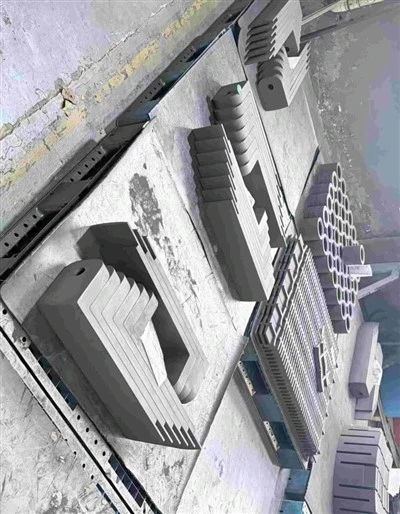
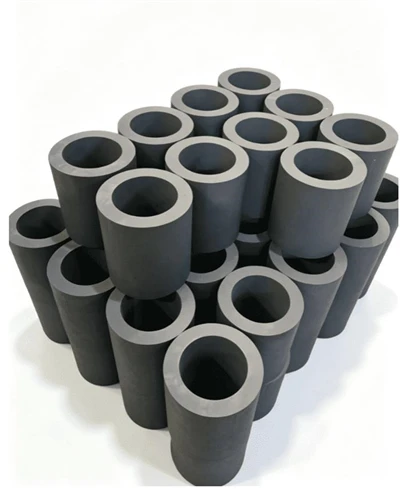
Graphite Heat Shield Plate for Vacuum Furnace Thermal Insulation
Jincheng graphite heat shield plates form rigid reflective insulation layers in high-temperature vacuum furnace hot zones, reducing radiant heat loss from the heating chamber and protecting furnace shells and sensitive components. Machined from high-density graphite and arranged in spaced shield packs, each plate reflects thermal radiation while maintaining structural stability under vacuum, high temperature and repeated thermal cycling common in brazing, sintering, heat treatment and crystal growth furnaces.
The shield plates are designed with mounting holes, spacers and cutouts matched to furnace geometry, heater layout and part loading requirements. Compared with soft felt insulation, rigid graphite shields provide controlled reflective surfaces, low outgassing and durable support for clean vacuum environments, while high-purity grades reduce contamination in semiconductor and specialty processing. Plates can be supplied as individual replacements, complete shield packs or matched hot-zone furniture sets.
Jincheng works from furnace drawings or existing shield dimensions to produce replacement and new-build heat shield plates, with material documentation for purity and thermal properties. Each plate is inspected for flatness, hole positions and surface quality, and engineering support is provided for shield pack design, spacing and hot-zone refurbishment in vacuum furnace systems.
Shield Performance
- Rigid reflective plates reduce radiant heat loss and improve hot-zone temperature uniformity.
- High-temperature stability under vacuum without sagging or significant deformation.
- Low outgassing and clean material behavior support high-quality vacuum processing.
- High-purity grades for semiconductor, brazing and contamination-sensitive furnace cycles.
- Mounting holes and spacer features engineered for precise shield pack spacing.
- Thermal shock tolerance for repeated furnace heating and cooling cycles.
- Individual plates and complete shield packs for hot-zone refurbishment.
Material and Dimensional Reference
| Parameter | Industrial Shield | High-Purity Shield |
|---|---|---|
| Graphite Type | High-density isostatic | Fine-grain high-purity isostatic |
| Bulk Density | 1.78-1.88 g/cm³ | 1.84-1.92 g/cm³ |
| Flexural Strength | 55-82 MPa | 72-92 MPa |
| Compressive Strength | 140-190 MPa | 175-215 MPa |
| Shore Hardness | 60-76 HSD | 70-82 HSD |
| Open Porosity | ≤9% | ≤7% |
| Ash Content | ≤0.1% | ≤0.03% |
| Thermal Conductivity | 80-125 W/mK | 90-135 W/mK |
| Plate Length | 100-1200 mm | |
| Plate Width | 100-1000 mm | |
| Plate Thickness | 3-30 mm | |
| Features | Mounting holes, cutouts, slots, spacer seats, curved profiles | |
| Flatness Tolerance | ≤0.2 mm over plate surface | |
| Maximum Temperature | Up to 2200°C in vacuum or protective atmosphere | |
Vacuum Furnace Applications
- Vacuum brazing furnaces: Shield packs controlling heat loss during controlled-atmosphere brazing cycles.
- Sintering and heat treatment: Reflective insulation for powder metal, ceramic and tool steel vacuum furnaces.
- Crystal growth equipment: High-purity shields for silicon and specialty crystal pulling hot zones.
- Research and laboratory furnaces: Custom plates for small high-temperature vacuum systems and process development.
- Hot-zone refurbishment: Replacement plates for aging shield packs and furnace rebuild programs.
- Specialty thermal processing: Shields for advanced ceramics, composites and high-temperature alloy treatment.
Verify shield spacing and mounting orientation during assembly, maintain clean surfaces and avoid mechanical damage to reflective faces, and support plates without over-constraining thermal expansion. Inspect for warping, cracking or erosion after furnace cycles, replace damaged plates rather than operating with compromised shield packs, and store components in clean dry conditions.
Jincheng Capability
- Large-plate machining with controlled flatness and mounting features.
- High-purity grades for clean vacuum and semiconductor processing.
- Complete shield pack and individual replacement plate supply.
- Hot-zone furniture matched to heaters, crucibles and support structures.
- Reverse engineering from furnace drawings and worn shield samples.
- Dimensional inspection and material documentation.
- Protective export packaging for large precision plates.
Frequently Asked Questions
How do rigid graphite shields compare with graphite felt insulation? Rigid shields work by reflecting radiation across spaced layers and offer low outgassing, clean surfaces and durable support, while felt primarily traps gas and reduces conduction in a porous structure. Shields are often preferred in clean vacuum environments and where precise hot-zone geometry is important.
How many shield layers are needed? Layer count depends on target hot-zone temperature, allowable shell temperature, furnace size and spacing. Multiple spaced plates reduce heat progressively, and we review furnace drawings and thermal requirements rather than applying a fixed number of layers.
What causes shield plates to warp? Warping can result from excessive temperature, inadequate support, mechanical constraint during expansion or cumulative creep. Proper thickness, mounting clearance and material grade help preserve flatness, particularly in large shield packs exposed to repeated high-temperature cycles.
Can individual plates be replaced in an existing shield pack? Yes. If mounting holes and dimensions match, individual damaged plates can be replaced without rebuilding the entire pack. We can reverse engineer dimensions from samples or drawings and produce matched plates for existing furnace hot zones.
Hot Tags: graphite heat shield plate for vacuum furnace thermal insulation, China graphite heat shield plate for vacuum furnace thermal insulation manufacturers, suppliers, factory