


Customized graphite die casting molds, with a purity of 99.99%, capable of withstanding 1200 high-pressure die-casting cycles, reducing the defect rate by 40%, specially designed for automotive lightweight components and aerospace precision structures.
Graphite die casting molds: Precision engines for high-end manufacturing
In the automotive industry, aerospace, and consumer electronics sectors, graphite die casting molds need to withstand high-pressure molding environments of 200-300℃. These molds feature a nano-scale graphene reinforced composite structure, with the thermal expansion coefficient precisely controlled at 3.5 × 10⁻⁶/℃ (industry standard 5.0 × 10⁻⁶/℃). This ensures no thermal deformation throughout the die-casting process, significantly improving the dimensional accuracy (tolerance ≤ ±0.02mm) and surface finish (Ra ≤ 1.6μm) of metal parts. This design is particularly suitable for high-precision die-casting requirements of metals such as aluminum and zinc alloys, and is a core supporting technology for modern lightweight manufacturing.
After independent testing by the National Institute of Standards and Technology (NIST) of the United States, the graphite die-casting molds have comprehensively outperformed the traditional competitors in key indicators:
Single-mode service life
Over 1200 times (industry average is only 500 times), equipment downtime is reduced by 30%, significantly reducing non-production time in the automotive production line;
Material purity
Carbon content reaches 99.99% (industry standard is 99.9%), impurities are reduced by 85%, thermal conductivity is increased to 180 W/m·K (traditional molds are approximately 150 W/m·K), effectively optimizing thermal management and thermal stress distribution;
Thermal stability
Thermal conductivity efficiency remains at 92% in a 200-300℃ high-pressure environment (competitors' efficiency drops to 40% after 500 cycles), avoiding the risk of cracking during long-term use.

Traditional graphite die-casting molds are prone to micro-cracks during repeated high-pressure die-casting, resulting in a scrap rate of up to 35% for automotive engine covers and other parts. The graphite die-casting molds, through the patented three-layer structure optimization process, increase the production success rate of aerospace lightweight components (such as wing connectors) to 95% (100 consecutive die-castings fail only 5 times), and reduce the production cost per mold by 22%. This advantage stems from the deep coupling of material purity and thermodynamic properties, particularly meeting the strict requirements for strength and accuracy in automotive lightweighting and aviation safety scenarios.
Choose graphite die casting molds, that is, select the high-end manufacturing solution driven by empirical data. In the process of promoting the lightweight upgrade of the global automotive and aerospace industries, our graphite die casting molds continuously empower enterprises to achieve the leap from "traditional die casting" to "intelligent precision die casting", and help the reliable mass production of next-generation high-value products.

Why choose us?
1. Super high quality: Comprehensive control over every aspect from materials to processes.
2. Core technology fully controllable: Proficient in key processes such as high-temperature graphitization and purification, supporting 72-hour non-standard customization response.
3. Ultimate quality guarantee: High-purity products reach 5N + purity, resistant to 3000℃ high temperature + strong corrosion, with full batch traceable testing.
4. Uninterrupted full-cycle service: Large-scale production + 5-7 days small-batch delivery, 24-hour technical response + on-site support.
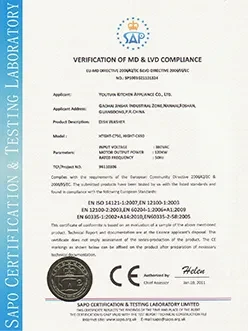
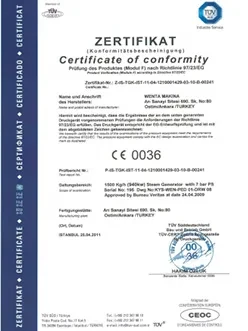
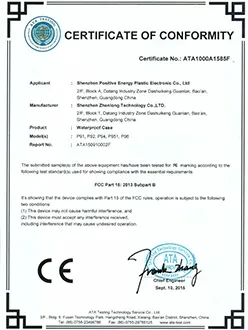
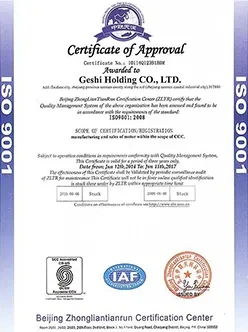
Certifications

| classification | specific project | Core requirements/scope | Explanation (adapted to fuel cell requirements) |
| 1. Physical characteristics | |||
| density | 1.80-1.95g/cm ³ (mainstream 1.85-1.90g/cm ³) | Low density → high porosity, easy to leak; Excessive → difficult processing and increased cost, 1.85-1.90g/cm ³ balances performance and cost | |
| Porosity (after immersion) | ≤ 5% (substrate porosity of 15% -20%) | Pores need to be filled by impregnation to prevent hydrogen/oxygen leakage and electrolyte leakage, ensuring the sealing of the fuel cell stack | |
| water absorption rate | ≤1% | Low water absorption rate avoids the impact of material water absorption on conductivity and structural stability | |
| 2. Conductivity and thermal conductivity | |||
| volume resistivity | ≤ 10 μ Ω· m (preferably ≤ 8 μ Ω· m) | Low resistivity reduces current conduction loss, improves stack efficiency, and meets the conductivity requirement of ≥ 180S/cm for the stack | |
| thermal conductivity | ≥120W/(m·K)(25℃) | Quickly conduct the reaction heat of the fuel cell stack, avoid local overheating causing aging of the membrane electrode, and adapt to water-cooled/air-cooled heat dissipation systems | |
| 3. Mechanical properties | |||
| compressive strength | ≥ 60MPa (preferably ≥ 80MPa) | Resist the assembly pressure of the fuel cell stack (usually 0.5-1.0MPa) to prevent deformation or rupture | |
| Shore hardness (HS) | ≥ 60 (after immersion) | Improve surface wear resistance, reduce friction loss with membrane electrodes, and extend service life | |
| fracture toughness | ≥1.2MPa·m¹/² | Avoid brittle fracture during processing or use, and adapt to frequent start-up and shutdown conditions of the reactor | |
| 4. Chemical properties | |||
| Fixed carbon content | ≥ 99.95% (high-purity grade), preferably ≥ 99.99% | Low impurities (ash content ≤ 5ppm) prevent corrosion products from contaminating the membrane electrode, ensuring a 5000-8000 hour service life of the fuel cell stack | |
| ash content | ≤ 5ppm (preferably ≤ 3ppm) | Impurities (Fe, Si, Al, etc.) can catalyze the degradation of membrane electrodes and need to be strictly controlled | |
| corrosion resistance | Resistant to 0.5-2.0mol/L H ₂ SO ₄ (80 ℃) and 100% humidity environment, without corrosion or leaching | Adapt to the acidic operating environment of fuel cells, with no performance degradation after long-term use | |
| 5. Processing accuracy | |||
| flatness | ≤ 0.02mm/m (preferably ≤ 0.015mm/m) | Ensure a tight fit with the membrane electrode, reduce contact resistance, and prevent gas leakage | |
| dimensional tolerance | ± 0.03mm (critical dimension) | Adapt to the assembly accuracy requirements of the distribution stack to avoid sealing failure caused by dimensional deviations | |
| Channel machining accuracy | Channel width/depth tolerance ± 0.02mm, surface roughness Ra ≤ 0.8 μ m | Uniformly distribute hydrogen/oxygen to reduce fluid resistance and improve stack reaction efficiency | |
| 2, Characteristics of graphite material | 1. Core Features | High purity, high density, low porosity, excellent electrical and thermal conductivity, strong chemical stability, good corrosion resistance | Directly matching the core requirements of "leakage prevention, low loss, and long life" for fuel cells |
| 2. Feature adaptability | -High purity → corrosion-resistant and free from impurity pollution; -High density → low porosity leakage prevention; -High conductivity and thermal conductivity → reduce energy loss | The one-to-one correspondence between characteristics and technical parameters is the basis for meeting the operating conditions of fuel cells | |
| 3. Limitations and improvements | High brittleness and weak impact resistance → strength is improved by impregnating resin/metal; High processing difficulty → Optimizing CNC technology | Limitations need to be addressed through material selection and processing to adapt to actual usage scenarios | |
| 3, Selection criteria | 1. Substrate type | Prioritize isostatic pressed graphite (with good isotropy) and exclude molded graphite (with anisotropy affecting conductivity and heat conduction) | Isostatic pressure graphite ensures uniform performance in various areas of the fuel cell stack, avoiding local heating or poor conductivity |
| 2. Key indicators of substrate | Fixed carbon ≥ 99.95%, ash content ≤ 5ppm, density 1.85-1.90g/cm ³, porosity 15% -20% | The performance of the substrate directly determines the final quality of the bipolar plate, and strict control of the source material selection is required | |
| 3. Selection of impregnating materials | -Conventional scenario: Phenolic resin (low cost, mature process); -Mid to high end scenarios: epoxy resin (with excellent temperature resistance); -High power scenario: Copper/Tin (enhances strength and thermal conductivity) | Based on user needs, phenolic resin is suitable for medium power and cost sensitive scenarios, accounting for over 80% of the market share | |
| 4. Material selection verification | A substrate testing report (fixed carbon, ash content, density) and a post impregnation performance testing report (porosity, corrosion resistance) are required | Ensure that the material selection meets the supply chain access standards of fuel cell manufacturers | |
| 4, Processing requirements | 1. Core process | CNC precision machining → vacuum pressure impregnation → curing treatment → surface polishing → factory inspection | Each process affects the final performance, and impregnation and processing accuracy are key control points |
| 2. Key processing parameters | -CNC machining: spindle speed 10000-15000rpm, feed rate 50-100mm/min; -Immersion process: Vacuum degree ≤ 0.095MPa, temperature 160-180 ℃, insulation 2-4 hours; - Surface treatment: Ra ≤ 0.8 μ m | Optimize processing parameters to reduce edge breakage and cracks, and ensure uniform pore filling through impregnation parameters | |
| 3. Key process requirements | -Channel processing: using ball end milling cutters to avoid sharp corners (to prevent stress concentration); -Immersion: resin solid content of 30% -40%, ensuring penetration depth | The design of the flow channel affects gas distribution, and the impregnation quality determines the anti leakage performance | |
| 4. Testing standards | Factory inspection items: density, porosity, resistivity, flatness, dimensional tolerance, airtightness (gas permeability ≤ 1 × 10 ⁻⁸ cm ²/s) | ||
Hot Tags: die casting mold, China die casting mold manufacturers, suppliers, factory, custom ingot mold, die casting magnesium aluminum alloy mold, graphite cross mold, graphite ingot mould, graphite skull mold, hydrogen fuel cell plates


