Graphite Riser Tube For Low Pressure Die Casting Machine

In a low pressure die casting machine the riser tube is the only path the metal takes between the holding furnace and the die. Furnace pressure pushes the aluminium up the tube and into the gate, and when the pressure drops the metal in the tube must drain back cleanly so the next shot starts from an empty bore.
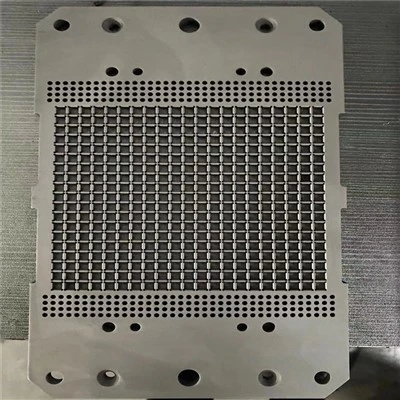
That duty explains the two things that matter most in the tube: the bore has to stay round and smooth through thousands of shots so the metal column rises at a predictable rate, and the joint at the top has to seal against the gate plate without a gasket, because a gasket at 700 C would fail within a shift. Jincheng machines the tube, and where the customer orders a set, the gate plate from the same drawing, so the joint clearance is fixed before the parts reach the machine.
Key Features
-
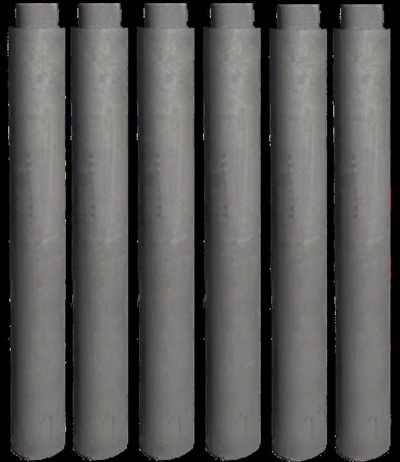
Bore geometry held over life - The bore is machined round and straight, and the diameter is reported on each tube, so the fill curve does not drift as the tube ages.
-
Gasket-free joint at the gate - A machined taper at the top of the tube bears directly on the gate plate seat, so there is no elastomer in the hot joint.
-
Thicker section at the melt line - The immersed end carries extra wall thickness, because erosion at the melt line is what ends tube life first.
-
Drain-back behaviour - A smooth, non-wetting bore lets the metal fall back at the end of the shot instead of freezing a skull in the tube.
-
Set-matched with the gate plate - When tube and gate are ordered together the taper is machined as a pair, so bore alignment is correct at installation.
-
Length to the furnace depth - Tube length is machined to the customer's furnace depth, so the immersed end sits at the intended level in the melt.
Technical Specifications
| Property | Typical Value |
| Material | Fine-grain isostatic graphite |
| Bulk density | 1.80 to 1.90 g/cm3 |
| Bore diameter | 20 to 90 mm |
| Outside diameter | 40 to 130 mm |
| Tube length | 300 to 1200 mm |
| Bore tolerance | +/-0.1 mm |
| Wall at the immersed end | 15 to 25 mm |
| Wall at the joint | 10 to 18 mm |
| Joint taper | 1 to 3 degrees |
| Flexural strength | 60 to 90 MPa |
| Ash content | Below 0.1 percent |
| Service temperature | Up to 800 C in air |
Applications & How to Use
Aluminium wheel low pressure casting
One tube per machine, replaced on a scheduled reline interval or when the bore shows erosion at the melt line.
Structural and chassis casting
Wide-bore tubes keep fill time short on heavy shots.
Cylinder head and block casting
Tube bore is matched to the gate area so the fill curve matches the die design.
Low pressure sand casting
Metal rises through the tube into a resin-bonded sand mold at a controlled rate.
Tube-only replacement
Where the gate plate taper is still within tolerance, a single tube restores the joint.
Why Choose Jincheng
- Every tube ships with its measured bore diameter, so the customer can track fill behaviour over time.
- The joint is a machined taper, not a gasket, so there is no elastomer in the hot path.
- Wall thickness is increased where erosion actually happens, at the melt line.
- Tube and gate can be machined as a matched set so alignment is fixed before installation.
- Length is machined to the furnace depth rather than to a catalogue size.
- Long tubes ship in cradles with the joint taper protected by a sleeve.
FAQ
How do I detect bore erosion before it causes a short shot?
Track the measured bore diameter and log fill time per shot. A fill time that has crept up by 10 percent usually means the bore has opened at the melt line.
Can a worn tube be re-bored?
No. Re-boring would thin the wall at the melt line, where the section is already reduced by erosion. Replacement is the practical route.
What causes a skull to freeze in the tube?
Insufficient drain-back time, a rough bore, or a tube cooled below the freezing point of the alloy before the metal falls back.
Should I preheat a new tube?
Yes. Preheat to drive off moisture and reduce the thermal shock at the first shot.
Do you supply the gate plate as well?
Yes, and when supplied together the taper is machined as a pair, which removes the alignment variable.
Related Graphite Products
Hot Tags: graphite riser tube for low pressure die casting machine - aluminium feed tube, China graphite riser tube for low pressure die casting machine - aluminium feed tube manufacturers, suppliers, factory, carbon graphite parts for vacuum furnaces, graphite heating elements vacuum furnace, graphite insulators for vacuum furnaces, graphite parts, vacuum furnace graphite crucibles, vacuum furnace graphite seals