Aluminum Degassing Graphite Rotor for Molten Metal Purification
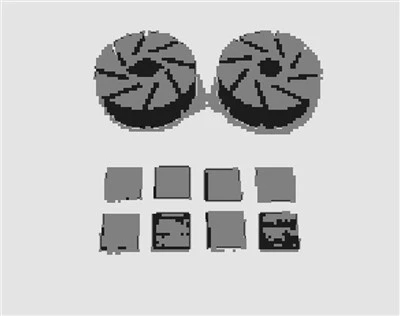
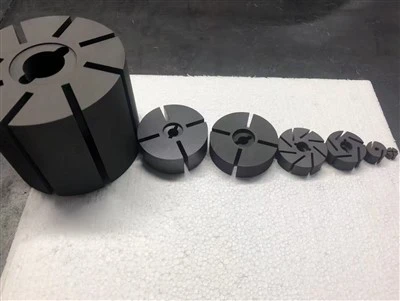
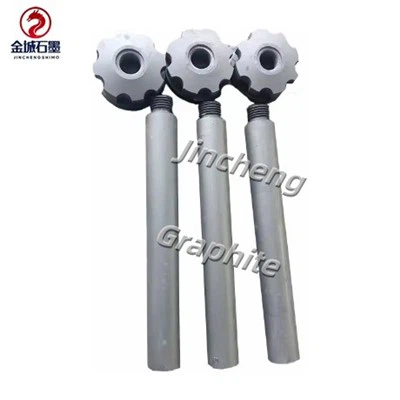
Jincheng aluminum degassing graphite rotors are precision rotating components used in molten aluminum purification equipment to inject inert gas and disperse fine bubbles through the melt, removing hydrogen and non-metallic inclusions before casting. Each rotor is machined from high-density graphite with a matched shaft and impeller profile, combining thermal shock tolerance, non-wetting behavior and corrosion resistance in continuous molten aluminum processing.
The rotor breaks introduced nitrogen or argon into small bubbles that rise through the aluminum, carrying dissolved hydrogen and floating inclusions to the surface for removal. Graphite's high-temperature stability and low thermal expansion preserve impeller geometry through repeated immersion, while its non-wetting surface reduces aluminum adhesion and supports clean rotation. Custom rotor and shaft profiles match specific degassing units, furnace depths and required bubble dispersion.
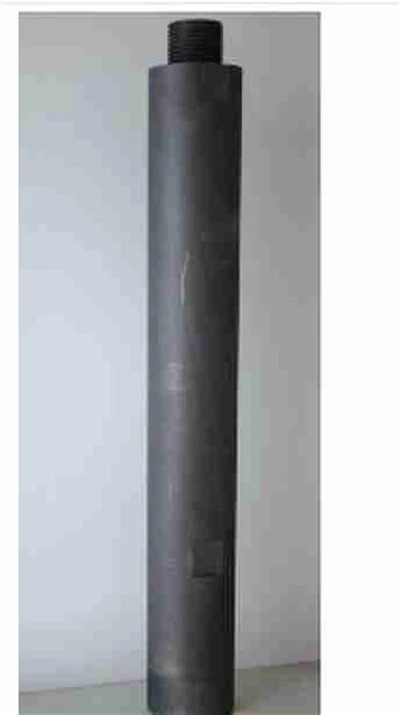
Jincheng supplies replacement rotors and shafts for foundry maintenance and production components for degassing equipment manufacturers, with material documentation and dimensional inspection. Each rotor is checked for impeller geometry, shaft fit and surface quality, and matched shafts, baffles and furnace accessories can be supplied as complete purification assemblies.
Rotor Benefits
- Precision impeller profile disperses inert gas into fine bubbles for hydrogen removal.
- High-density graphite resists molten aluminum attack and thermal shock.
- Non-wetting surface reduces aluminum adhesion and supports clean rotation.
- Low thermal expansion preserves impeller geometry through repeated immersion.
- Custom rotor and shaft profiles match specific degassing equipment.
- High-temperature stability supports continuous foundry operation.
- Matched shafts and baffles available as complete purification sets.
Material and Dimensional Reference
| Parameter | Standard Rotor | High-Density Rotor |
|---|---|---|
| Graphite Type | High-density isostatic | Fine-grain high-density isostatic |
| Bulk Density | 1.75-1.86 g/cm³ | 1.84-1.92 g/cm³ |
| Flexural Strength | 52-78 MPa | 72-92 MPa |
| Compressive Strength | 138-185 MPa | 175-215 MPa |
| Shore Hardness | 60-75 HSD | 70-82 HSD |
| Open Porosity | ≤9% | ≤7% |
| Thermal Conductivity | 80-120 W/mK | 90-135 W/mK |
| Rotor Diameter | 80-300 mm | |
| Shaft Diameter | 20-80 mm | |
| Shaft Length | 300-1200 mm | |
| Features | Impeller blades, gas channel, coupling profile, custom baffle | |
| Maximum Temperature | Suitable for molten aluminum operating range | |
Foundry Applications
- Aluminum casting foundries: Degassing rotors for hydrogen removal in aluminum and alloy casting production.
- Continuous and batch degassing units: Replacement rotors for inline and ladle molten metal purification equipment.
- Automotive aluminum parts: Purification components for high-quality automotive casting production.
- Ingot and billet casting: Rotors supporting clean melt preparation before ingot and billet casting.
- Specialty alloy processing: Custom rotors for aluminum alloy and non-ferrous metal purification.
- Maintenance and spares: Replacement rotor and shaft sets for foundry overhaul programs.
Preheat rotors before immersion, verify coupling and gas channel alignment, and maintain controlled rotation speed and gas flow for stable bubble dispersion. Inspect impeller blades for erosion or chipping, avoid mechanical impact during immersion, and store spare rotors with shaft and blade protection.
Jincheng Capability
- Precision impeller and gas channel machining.
- High-density non-wetting grades for molten aluminum.
- Custom rotor and shaft profiles for degassing equipment.
- Matched shafts, baffles and complete purification assemblies.
- Reverse engineering from existing rotors and samples.
- Dimensional inspection and material documentation.
- Protective export packaging for long rotor components.
Frequently Asked Questions
How does degassing reduce aluminum casting defects? Dissolved hydrogen forms porosity during solidification, while non-metallic inclusions create defects. The rotor disperses fine inert bubbles that collect hydrogen and attach inclusions, carrying them to the surface and improving casting density and mechanical properties.
What affects bubble size and degassing efficiency? Rotor geometry, rotation speed, gas flow rate, impeller depth and baffle arrangement influence bubble dispersion. Fine evenly distributed bubbles provide better contact and removal efficiency, and the rotor profile is matched to the specific degassing unit.
What are typical rotor wear indicators? Erosion of impeller blades, chipping, reduced bubble dispersion, shaft damage or increased vibration indicate replacement. Dense grades and controlled operation extend service life, and regular inspection prevents poor purification before casting.
Can rotors be matched to existing degassing machines? Yes. We can reproduce rotor diameter, shaft length, gas channel and coupling profiles from drawings or worn components, including custom designs for inline and batch degassing equipment.
Hot Tags: aluminum degassing graphite rotor for molten metal purification, China aluminum degassing graphite rotor for molten metal purification manufacturers, suppliers, factory, aerospace alloy stirrer graphite rotor, aluminum melt stirring rotor, degassing graphite rotor and shaft, graphite rotor, graphite rotor for aluminum melt, graphite rotor industrial mixing