Carbon-carbon (C/C) composite materials, reinforced graphite structures engineered for extreme thermal and mechanical performance, have revolutionized aerospace braking systems over the past three decades. What began as a specialized technology for military fighter jets has become the standard for commercial aircraft, business jets, and reusable space vehicles, delivering unmatched braking performance, weight savings, and service life compared to traditional steel brake systems. As global air traffic recovers and next-generation aircraft programs accelerate, the market for aerospace C/C brake components continues its steady, long-term expansion.
The global carbon-carbon composites for aerospace market reached USD 1.54 billion in 2025 and is projected to grow to USD 2.53 billion by 2032 at a compound annual growth rate (CAGR) of 7.34%, according to PW Consulting analysis. Aircraft brake disks represent the single largest application segment, capturing 61.5% of total aerospace C/C demand. This dominant position reflects the near-universal adoption of carbon brakes across commercial aviation fleets, from narrow-body single-aisle jets to wide-body long-haul aircraft and military platforms. North America leads the regional market at USD 602.5 million, driven by the presence of major aircraft OEMs including Boeing, Lockheed Martin, and Northrop Grumman, alongside tier-one brake system suppliers.

The performance advantages of carbon-carbon composite brakes over conventional steel brakes are substantial and well-documented. C/C brake disks are approximately 40–50% lighter than equivalent steel brakes, reducing aircraft weight by hundreds of kilograms per plane. This weight savings translates directly into fuel savings-estimated at 2–4% for typical commercial aircraft operations-along with increased payload capacity and extended range. Beyond weight reduction, C/C brakes deliver superior friction performance across extreme temperature ranges, maintaining consistent braking force from sub-zero cruise altitude conditions to landing temperatures exceeding 1,500°C. They also offer dramatically longer service life, with overhaul intervals typically 2–3 times longer than steel brakes, reducing maintenance costs and aircraft downtime.
The manufacturing process for aerospace-grade C/C brake components is highly sophisticated and capital-intensive. It begins with high-performance carbon fiber fabrics arranged in carefully designed layup patterns to optimize strength and thermal properties in all directions. These fiber preforms are then infiltrated with carbon matrix material through processes like chemical vapor infiltration (CVI), which accounts for 53.4% of production, and liquid resin impregnation followed by carbonization. Multiple infiltration and heat treatment cycles build up the dense carbon matrix structure, transforming the fiber preform into a solid, homogeneous C/C component. Final machining, surface treatment, and rigorous quality certification complete the production process, with full manufacturing cycles spanning several months per set.
Beyond commercial aviation brakes, C/C graphite composites serve critical roles in other aerospace applications. They are used in rocket nozzle throats and exit cones, where they withstand the extreme temperatures and erosive environment of rocket exhaust. They form structural components in hypersonic vehicle leading edges and thermal protection systems. And they appear in satellite and spacecraft thermal management hardware where lightweight, high-temperature stability is essential. The broader high-density C/C composite market, encompassing all industrial and aerospace applications, reached USD 1.82 billion in 2025 and is projected to reach USD 3.15 billion by 2032 at an 8.15% CAGR, reflecting the material's expanding utility across multiple high-tech sectors.
Huixian Jincheng Abrasive & Graphite Mold Factory, with over 40 years of precision graphite manufacturing experience based in Huixian City, Henan Province, contributes to the aerospace carbon-carbon supply ecosystem through its expertise in high-density graphite materials and precision machining. While the company does not produce finished C/C brake components, its core graphite processing capabilities are foundational to the broader advanced carbon materials industry.
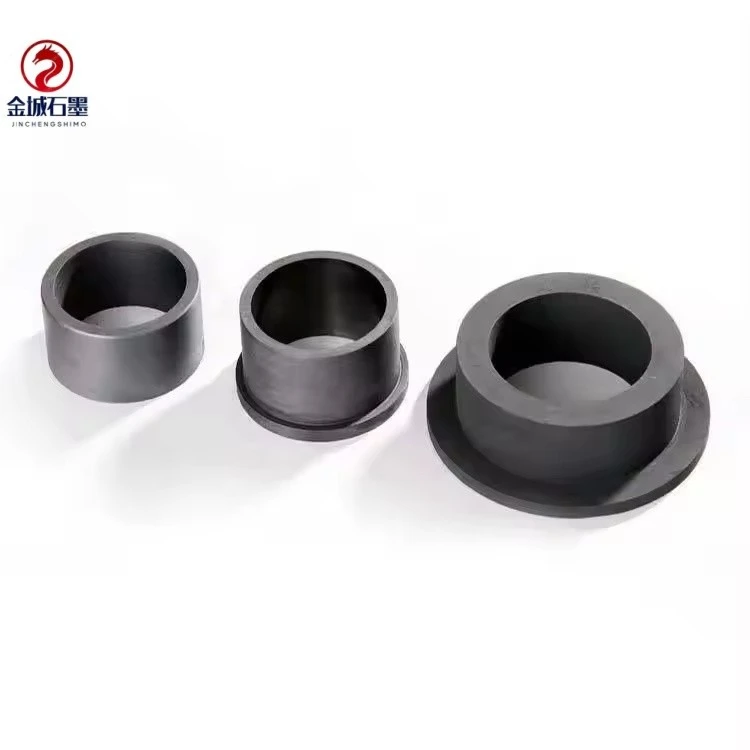
Jincheng Graphite produces high-purity molded and isostatic graphite materials using powder compression molding, multiple vacuum impregnation cycles, and high-temperature graphitization-many of the same fundamental processing techniques used in C/C composite manufacturing. The company's deep understanding of graphite densification, thermal processing, and material characterization provides a strong technical foundation for participation in advanced carbon material supply chains. With over 50 CNC machining centers and maximum processing dimensions of 1,000mm, Jincheng Graphite can precision-machine graphite tooling, mandrels, and fixturing used in C/C component production, supporting aerospace component manufacturers with reliable, high-quality graphite processing services.
The company's commitment to consistent material quality and tight process control aligns with aerospace industry expectations, where even minor material variations can have significant performance implications. Jincheng Graphite's comprehensive quality testing protocols, including density measurement, resistivity analysis, and dimensional verification, ensure that every component meets precise specifications. This attention to quality has positioned the company as a trusted supplier for industrial customers with demanding performance requirements, and provides a platform for deeper engagement with aerospace supply chains as China's commercial space and aviation sectors continue their rapid expansion.
Looking ahead, several key trends will shape the aerospace C/C composite market. The recovery of global commercial air traffic to pre-pandemic levels and beyond is driving strong aftermarket demand for brake replacements. Next-generation aircraft programs including new narrow-body jets and advanced regional aircraft will incorporate C/C brakes as standard equipment from the outset. The rapid growth of commercial spaceflight is creating new demand for C/C thermal protection and propulsion components. And ongoing material science advancements are improving C/C performance while reducing manufacturing costs, opening doors to new aviation and defense applications. For graphite material specialists like Jincheng Graphite, this growing aerospace market represents a long-term opportunity to apply their core materials expertise to one of the most demanding and technologically advanced industry sectors.