EDM Graphite Plate for Electrical Discharge Machining Electrode Blanks
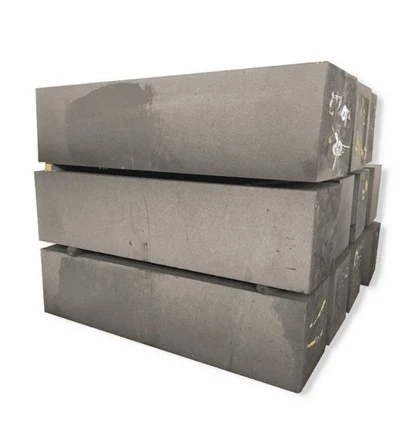
Jincheng EDM graphite plates are precision electrode blanks used in electrical discharge machining to produce mold cavities, die features and complex conductive workpieces through controlled spark erosion. Each plate is manufactured from fine-grain graphite with controlled particle size, density and uniformity, providing a stable material that can be machined into detailed electrodes while delivering controlled metal removal, surface finish and wear behavior during EDM operations.
The plate is supplied as a machined blank ready for CNC milling, grinding or direct electrode fabrication, with material grades selected for the required finish, detail and metal removal rate. Fine-grain grades support sharp detail and fine surface finishes, while coarser grades provide efficient roughing and high metal removal. Graphite's low density compared with metal, stable machining behavior and resistance to thermal damage make it the dominant EDM electrode material in mold and die manufacturing.
Jincheng supplies EDM graphite plates in standard sizes and custom cut blanks, with material documentation and grain grade information. Each plate is checked for dimensions, density and surface quality, and engineering support is provided for grade selection, electrode design and EDM process optimization.
Plate Benefits
- Fine-grain uniform graphite supports detailed electrode machining and sharp features.
- Controlled density and particle size provide stable EDM wear and metal removal.
- Fine grades deliver smooth cavity finishes and reduce secondary polishing.
- Coarser grades support efficient roughing and high material removal rates.
- Lightweight blanks are easy to machine and fixture compared with metal electrodes.
- Thermal stability resists damage from concentrated spark energy.
- Custom cut sizes reduce waste and match electrode and fixture requirements.
Material and Grade Reference
| Parameter | Fine Finish Grade | General EDM Grade | High-Removal Grade |
|---|---|---|---|
| Particle Size | 1-5 μm | 5-10 μm | 10-20 μm |
| Bulk Density | 1.82-1.90 g/cm³ | 1.75-1.85 g/cm³ | 1.65-1.78 g/cm³ |
| Flexural Strength | 70-90 MPa | 55-75 MPa | 45-65 MPa |
| Shore Hardness | 70-82 HSD | 60-75 HSD | 55-68 HSD |
| Electrical Resistivity | ≤13 μΩ·m | ≤11 μΩ·m | ≤9 μΩ·m |
| Typical Finish | Fine detail, smooth finish | General mold work | Efficient roughing |
| Plate Thickness | 10-150 mm | ||
| Plate Width | 100-500 mm | ||
| Plate Length | 100-600 mm | ||
| Surface Condition | Machined blank, custom cut | ||
| Maximum EDM Rating | Grade-specific current and finish parameters | ||
EDM Applications
- Plastic injection molds: Electrode blanks for detailed mold cavities, ribs and textured surfaces.
- Die and tooling work: Electrodes for forging, extrusion, die casting and stamping die features.
- Fine detail and micro EDM: Fine-grain plates for thin ribs, sharp corners and precision components.
- Roughing and cavity sinking: High-removal grades for efficient bulk metal removal in large cavities.
- Aerospace and specialty parts: Electrodes for hard metal and complex conductive workpiece machining.
- Electrode fabrication shops: Standard blanks for custom EDM electrode production and tool rooms.
Select grade based on finish, detail and removal requirements, machine electrodes with sharp tooling and dust extraction, and verify electrode dimensions before sinking. Use appropriate flushing and current settings, allow fine grades for finishing passes, and store plates in dry clean conditions to protect surfaces.
Jincheng Capability
- Multiple grain grades for finish, general and high-removal EDM work.
- Custom cut blanks with controlled thickness and flatness.
- Fine-grain high-density plates for detail and micro electrodes.
- Grade selection and electrode engineering support.
- Small and production quantity supply.
- Dimensional and material documentation.
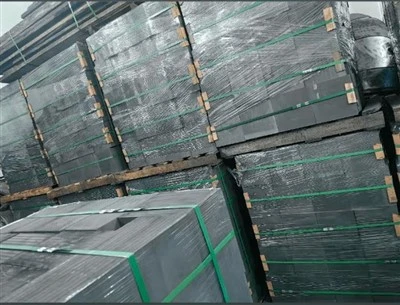
- Protective export packaging for precision blanks.
Frequently Asked Questions
Which graphite grade is needed for fine surface finish? Fine-grain high-density grades provide the smoothest finishes and sharpest detail because small particles reduce electrode surface irregularity and wear. They are typically used for finishing and detail work, while coarser grades handle roughing efficiently.
Why is graphite preferred over copper for EDM? Graphite is lighter, easier to machine, thermally stable and supports high metal removal rates with low wear. It can produce fine detail and is particularly efficient in modern CNC EDM, while copper remains useful in specific high-finish and specialized applications.
Can plates be cut to custom electrode sizes? Yes. We can supply standard plates or cut blanks to specific thickness, width and length, reducing waste and handling in electrode fabrication. Custom cut tolerances and surface conditions can be matched to workshop requirements.
How does particle size affect electrode wear? Particle size and density influence wear resistance, finish and detail. Fine grades support controlled finishing and sharp features, while grade selection must balance wear, removal rate and surface target rather than simply selecting the finest material for every operation.
Hot Tags: edm graphite plate for electrical discharge machining electrode blanks, China edm graphite plate for electrical discharge machining electrode blanks manufacturers, suppliers, factory, graphite block electrical grade, graphite block for mechanical system, graphite block for optical industry, graphite block for precision machining system, graphite block tooling material, thermal resistant graphite block