Graphite Sagger and Setter Plate for Ceramic Firing and Sintering
Product Overview
Our graphite saggers and setter plates are flat and box-shaped refractory supports used to hold ceramic components, ferrite cores, and electronic parts during high-temperature sintering in vacuum or controlled-atmosphere furnaces. Graphite saggers provide a flat, non-reactive surface that does not stick to ceramic parts and withstands repeated firing cycles up to 2000°C. They are essential consumable furniture in the production of ferrite magnets, ceramic cutting tools, piezoelectric components, and advanced technical ceramics where dimensional accuracy and surface finish are critical.
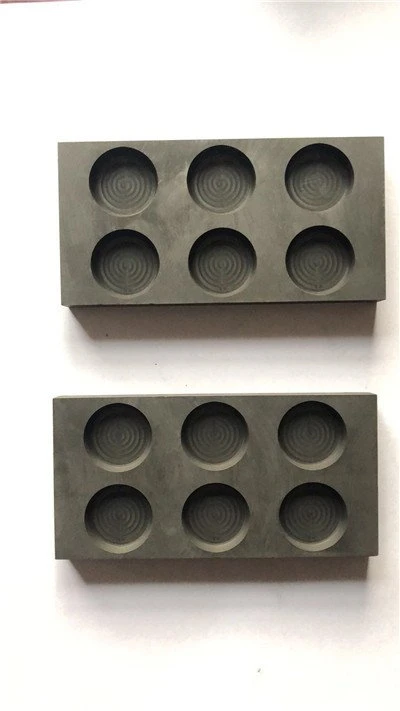
At Jincheng Graphite, we manufacture flat setter plates, box-type saggers, and custom-shaped firing supports from high-density isostatic graphite. Each sagger is precision-planed flat and can be machined with recesses, pockets, or registration features to hold specific ceramic parts. We supply saggers for both batch furnace production and continuous kiln operations, and can reverse-engineer replacement saggers from your existing worn furniture.
Key Features
- Flat, dimensionally stable - maintains flatness through hundreds of firing cycles
- Non-reactive surface - does not stick to or contaminate ceramic parts
- High temperature resistance - usable up to 2000°C in vacuum or inert gas
- Custom geometries - flat plates, box saggers, or pocketed setters for specific parts
- Precision machined - flatness and parallelism controlled for consistent part support
- Thermal shock resistant - withstands rapid heating and cooling in production kilns
- Reusable - lasts hundreds of cycles before surface wear requires replacement
- Repairable - worn surfaces can be re-planed to extend sagger life
Technical Specifications
| Parameter | Value |
|---|---|
| Material | High-density isostatic graphite |
| Bulk Density | 1.75 - 1.85 g/cm³ |
| Flexural Strength | 45 - 60 MPa |
| Max Temperature | 2000°C (vacuum/inert) |
| Standard Plate Sizes | 100×100 to 400×400 mm |
| Thickness | 5 - 20 mm |
| Flatness | < 0.1 mm per 200 mm |
| Parallelism | < 0.15 mm per 200 mm |
| Dimensional Tolerance | ±0.2 mm |
| Box Sagger Depth | 10 - 50 mm (custom) |
| Surface Finish | Ra 1.6 - 3.2 µm |
| Service Life | 200 - 500 cycles (application-dependent) |
Applications
- Ferrite magnet sintering - setter plates for MnZn and NiZn ferrite cores
- Ceramic cutting tools - saggers for Si3N4 and Al2O3 insert sintering
- Piezoelectric ceramics - flat setters for PZT and barium titanate components
- Ceramic electronic packages - saggers for alumina and LTCC substrate firing
- Advanced ceramics - setter plates for SiC, Si3N4, and zirconia sintering
- Ceramic grinding media - saggers for alumina and zirconia ball sintering
Why Choose Jincheng Graphite?
- Precision planing - both faces ground for flat, parallel support surfaces
- Custom sagger design - pockets, recesses, and covers for your specific parts
- Material selection - recommend graphite grade based on your firing temperature and atmosphere
- Reverse engineering - replicate worn saggers from samples or drawings
- Refurbishment service - re-plane worn surfaces to extend sagger life
- Fast lead times - standard plates ship within 7-10 business days
- Competitive pricing - factory-direct sagger and setter plate supply
- Volume supply - reliable monthly supply for ceramic production lines
FAQ
Q: How often should I replace graphite saggers?
A: Under typical vacuum sintering at 1400-1800°C, graphite saggers last 200-500 cycles. Replace them when the surface becomes uneven, develops cracks, or begins to affect part flatness. Many users re-plane the top surface once to extend life by 100-200 additional cycles.
Q: Do I need to coat the sagger surface?
A: In most vacuum sintering applications, uncoated graphite works well because it does not react with ceramics. If your ceramic parts contain reactive oxides that might stick, we can offer a BN-coated or CaO-stabilized zirconia wash as a barrier coating.
Q: Can you make saggers with custom pockets for my parts?
A: Yes. We CNC-machine pockets, recesses, and locating features into setter plates to hold specific ceramic components. Send us your part drawing or a sample part, and we will design a sagger that cradles the part during firing.
Q: What is the difference between a setter plate and a sagger?
A: A setter plate is a flat support surface; a sagger is a box-shaped container that holds parts and can be stacked. Setter plates are used for flat, open firing; saggers are used when parts need enclosure, protection, or stacking in the kiln.
Hot Tags: graphite sagger and setter plate for ceramic firing and sintering, China graphite sagger and setter plate for ceramic firing and sintering manufacturers, suppliers, factory, gold and silver cast graphite box, graphite block heat exchanger, graphite block type heat exchanger, graphite boat, graphite crucible in solar cell manufacturing, solar silicon crystal growth graphite