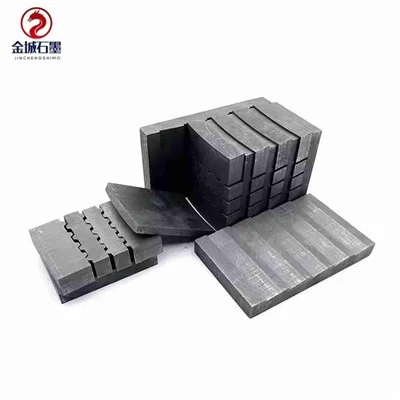
Labyrinth Graphite Seal Plate & Spiral Flow Distribution Disc for Pumps & Process Equipment
The labyrinth graphite seal plate (also called a spiral flow disc or labyrinth flow plate) is a circular graphite component machined with a continuous, precision-cut spiral or labyrinth groove pattern across its face. The winding channels create a long, restricted flow path that reduces leakage, throttles pressure and controls the movement of gases or liquids, while the non-contacting geometry avoids the friction and wear of conventional face seals. Combining this labyrinth effect with graphite's natural lubricity, high-temperature stability and chemical resistance makes the plate effective in pumps, compressors, process columns and rotating equipment.
Unlike simple sealing rings, a labyrinth plate relies on a series of controlled turns and restrictions rather than direct contact, so it can run with minimal wear even under high-speed or thermal-cycling conditions. The split design and mounting holes allow the plate to be installed around shafts and located accurately in the equipment. Jincheng manufactures these plates from high-density, fine-grain graphite with smooth, accurately profiled grooves and clean edges, producing a balanced flow path that resists erosion and thermal shock. Spiral geometry, groove width, number of turns and split configuration are tailored to the pressure drop and leakage requirements.
Our engineering team works from customer drawings, samples or equipment specifications, supplying labyrinth plates with mounting holes and custom flow profiles. With reliable throttling, low wear and long service life, Jincheng labyrinth graphite seal plates help equipment manufacturers and process plants reduce leakage and maintain stable operation in demanding high-temperature and corrosive environments.
Key Features of Our Labyrinth Graphite Seal Plate
- Continuous labyrinth path: Precision spiral grooves create a long, restricted flow route for effective throttling.
- Non-contacting operation: Reduces friction and wear compared with conventional contact face seals.
- Leakage control: Multiple turns and restrictions lower pressure and limit gas or liquid leakage.
- Natural lubricity: Graphite supports occasional contact without galling or seizure.
- High-temperature stability: Retains groove geometry and strength at elevated operating temperatures.
- Chemical resistance: Withstands corrosive process fluids and environments.
- Split design option: Allows installation around shafts and accurate location.
- Custom flow profiles: Groove width, turns and pattern engineered to the pressure-drop requirement.
Technical Specifications
| Parameter | Typical Value / Range |
|---|---|
| Material | High-density fine-grain graphite |
| Bulk density | 1.70 – 1.90 g/cm³ |
| Shore hardness | 50 – 75 HSD |
| Compressive strength | 70 – 130 MPa |
| Flexural strength | 35 – 65 MPa |
| Electrical resistivity | 8 – 14 µΩ·m |
| Porosity | ≤ 12% |
| Plate shape | Circular, split or solid |
| Outer diameter | 50 – 600 mm (custom) |
| Plate thickness | 10 – 60 mm |
| Groove width | 2 – 20 mm |
| Groove position tolerance | ± 0.05 – ± 0.2 mm |
| Surface roughness | Ra 1.6 – 3.2 µm |
| Surface treatment | As-machined, impregnated, coated |
| Operating temperature | Up to 1,200°C in inert/vacuum service |
Applications & How to Use
Labyrinth graphite plates are mounted around a shaft or within a housing, with the grooved face aligned to the flow path and located using mounting holes. They are commonly used in:
- Pumps and pump seals: Throttle leakage and reduce wear in high-temperature and corrosive pumping.
- Compressors and turbines: Provide non-contacting shaft seals under high-speed operation.
- Process columns and reactors: Control gas or liquid flow and pressure through spiral channels.
- Rotary equipment: Limit leakage while accommodating thermal expansion and movement.
- Heat-treatment and furnace systems: Direct and restrict process gas flow at high temperatures.
- Custom throttling devices: Serve as flow discs in engineered pressure-control assemblies.
During installation, verify the groove profile and mounting faces are clean and undamaged, then locate the plate accurately and maintain the designed clearance around the shaft. For split plates, align the halves carefully to preserve the flow path. During operation, monitor leakage and pressure drop, and inspect the grooves for erosion, cracking or blockage, replacing the plate when the flow profile or sealing performance is compromised.
Why Choose Jincheng for Your Labyrinth Plate
- Precision groove machining: Accurate spiral and labyrinth profiles with tight position tolerance.
- Sealing application expertise: Plates designed for throttling and leakage control in rotating equipment.
- Premium graphite grades: High-density materials selected for wear and thermal shock resistance.
- Custom engineering: Flow patterns, splits and mounting tailored to the equipment.
- Quality inspection: Dimensional and groove-quality checks on every plate.
- Reliable global delivery: Secure packaging and on-time export logistics.
Frequently Asked Questions
How does a labyrinth seal differ from a face seal?
A labyrinth seal is non-contacting and uses a long, restricted spiral groove path to throttle flow and reduce leakage, so it experiences much less friction and wear than a contact face seal and suits high-speed and thermal-cycling service.
Can the plate be split for installation around a shaft?
Yes. We can supply split labyrinth plates with accurately aligned halves and mounting holes, allowing installation without removing the shaft or major equipment components.
How is the leakage and pressure drop controlled?
The groove width, number of turns and restriction geometry are engineered to the required pressure drop and allowable leakage, with the spiral path lengthening the flow route to reduce throughput.
What fluids and temperatures can the plate handle?
Graphite is chemically resistant and stable at high temperatures, so the plates can handle corrosive gases and liquids and operate at elevated temperatures, subject to the specific grade and service environment.
When should a labyrinth plate be replaced?
Replace it when the grooves show erosion, cracking or blockage that changes the flow profile, pressure drop or leakage, or when the plate no longer fits or aligns correctly in the equipment.
Hot Tags: labyrinth graphite seal plate & spiral flow distribution disc for pumps & process equipment, China labyrinth graphite seal plate & spiral flow distribution disc for pumps & process equipment manufacturers, suppliers, factory, carbon graphite parts for vacuum furnaces, graphite heating elements vacuum furnace, graphite parts, vacuum furnace graphite crucibles, vacuum furnace graphite parts, vacuum furnace graphite screws