Rod Or Strip Heating Elements: Choosing The Graphite Form
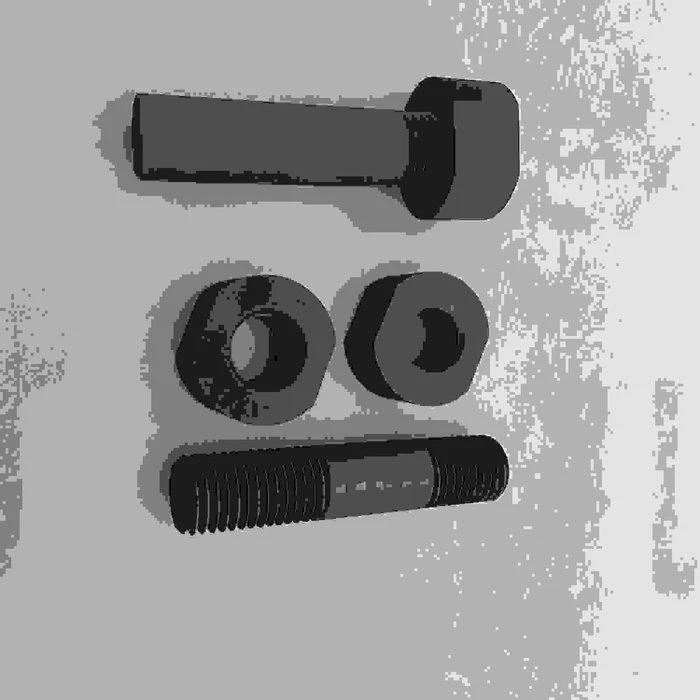
Rod and strip elements are both graphite, and they behave differently enough that the choice should follow the furnace rather than the supplier's stock. Resistance, radiating area, support scheme and replacement method all change with the form.
A rod element concentrates heat in a small area and is easy to support at its ends. A strip element presents a large radiating face and needs support along its length so it does not sag into the load.
This page compares the two on the points that decide a design.
Resistance and power
A rod element has a smaller cross-section for its length, so it reaches a given resistance with a different geometry than a strip. Changing form without recalculating the power supply usually produces a furnace that cannot reach temperature.
Radiating area
A strip presents more area per unit length, which gives a more even radiation pattern and a lower surface temperature for the same power. That matters where a hot spot would damage the load.
Support
Rods are supported at the ends and are stable along their length. Strips sag, so they need support at intervals along the length, and those supports are themselves consumables.
Replacement practice
A rod set is usually replaced element by element; a strip set is often replaced as a panel. The replacement method decides how much of the hot zone is disturbed during a change, which affects how often the zone has to be re-aligned.
Which to choose
Choose a rod form where the zone is tall and narrow and the load is central. Choose a strip form where the load is wide and the radiation pattern must be even. Where a furnace is converted, recalculate the power supply rather than reusing it.
Practical Checklist
- Form change requires a power recalculation.
- Strips give more radiating area and a lower surface temperature.
- Strips need support along the length; rods are stable end-supported.
- Match the form to the load shape and the radiation pattern needed.