

As renewable energy deployment accelerates worldwide, grid-scale energy storage has emerged as the critical enabling technology for balancing intermittent solar and wind generation. While lithium-ion batteries dominate current storage installations, a new generation of advanced graphite-based technologies is transforming energy storage systems across multiple architectures-from battery electrodes to fuel cell components and thermal storage media. The global push toward long-duration energy storage (LDES) is particularly driving innovation in graphite materials that can withstand thousands of charge-discharge cycles while maintaining performance.

Graphite's role in energy storage extends far beyond its well-established position as the standard anode material in lithium-ion batteries. Today, graphite materials are integral to flow battery electrodes, hydrogen fuel cell bipolar plates for power-to-gas storage systems, high-temperature thermal storage blocks, and conductive components in supercapacitors. Each application leverages different graphite properties: exceptional electrical conductivity, thermal stability, chemical inertness, and the ability to intercalate ions within its layered crystal structure.
In lithium-ion battery systems, which represent the largest energy storage market segment, graphite remains the dominant anode material despite ongoing research into alternatives like silicon. Modern high-energy-density batteries use sophisticated engineered graphite blends combining natural and synthetic graphite with carefully optimized particle size distributions and surface treatments. Recent research breakthroughs, such as MXene-coated graphite anodes demonstrated by Chinese research teams, have achieved remarkable performance improvements-including 93% capacity retention after 1,200 cycles at -20°C and energy densities reaching 273 Wh/kg. These advances address critical limitations of traditional graphite anodes in low-temperature environments and high-rate charging applications.
Beyond lithium-ion, graphite is playing an expanding role in long-duration storage technologies. Vanadium redox flow batteries, increasingly deployed for 4–12 hour grid storage applications, use graphite felt electrodes that provide large surface area for electrochemical reactions while maintaining excellent corrosion resistance in acidic electrolytes. Similarly, hydrogen-based energy storage systems-where excess renewable electricity generates hydrogen via electrolysis for later use in fuel cells-depend on graphite components at both ends of the cycle: graphite electrodes in electrolyzers and graphite bipolar plates in fuel cells.
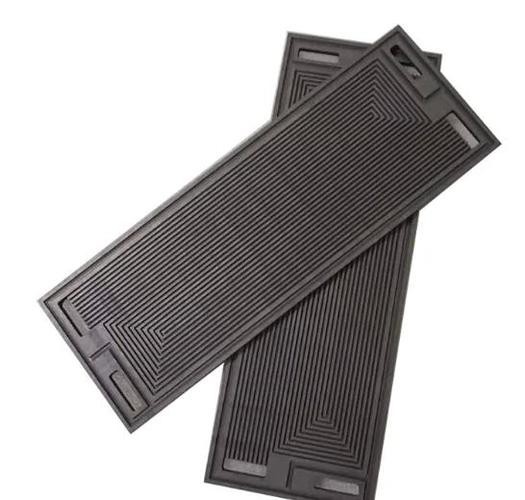
Huixian Jincheng Abrasive & Graphite Mold Factory, a specialized graphite manufacturer with over four decades of industry experience, is at the forefront of supplying graphite components for energy storage applications. Based in Huixian, Henan Province, the company produces high-precision graphite bipolar plates for hydrogen fuel cell energy storage systems, along with graphite electrodes, heat dissipation blocks, and structural components used in various battery and energy storage configurations.
Jincheng Graphite's fuel cell bipolar plates, manufactured from high-density molded and isostatic graphite, are particularly well-suited for stationary energy storage systems. These plates undergo multiple vacuum impregnation processes to achieve near-zero gas permeability, ensuring hydrogen containment safety over years of continuous operation. With CNC machining capabilities handling dimensions up to 1000mm, the company can produce plates for both small modular storage units and larger utility-scale fuel cell installations. The high thermal conductivity of their graphite products also supports efficient thermal management within battery and fuel cell stacks, preventing hotspots and extending system lifespan.
The company's powder metallurgy expertise also translates into advantages for producing specialized graphite components for energy storage. By controlling graphite powder particle size distribution and molding parameters, Jincheng Graphite can tailor porosity, density, and electrical properties to match specific application requirements. This customization capability is increasingly valuable as energy storage system developers seek optimized materials for next-generation chemistries and system architectures.
Market analysts project strong continued growth for graphite materials in energy storage applications. The global push for carbon neutrality, combined with falling renewable energy costs and growing grid instability, is driving massive investment in storage infrastructure. While lithium-ion will remain dominant in the near term, long-duration storage technologies including flow batteries, hydrogen storage, and thermal systems are all expected to capture growing market share-each bringing additional demand for specialized graphite components.
For graphite manufacturers like Jincheng Graphite, the energy storage transition represents a significant strategic opportunity. The company's existing expertise in fuel cell graphite components positions it well to serve the growing stationary storage market, while ongoing R&D into advanced graphite composites and surface treatments will enable participation in next-generation battery technologies. As the global energy storage market continues its rapid expansion, specialized graphite producers with strong technical capabilities and quality track records will be best positioned to capture value in this critical clean energy supply chain.
