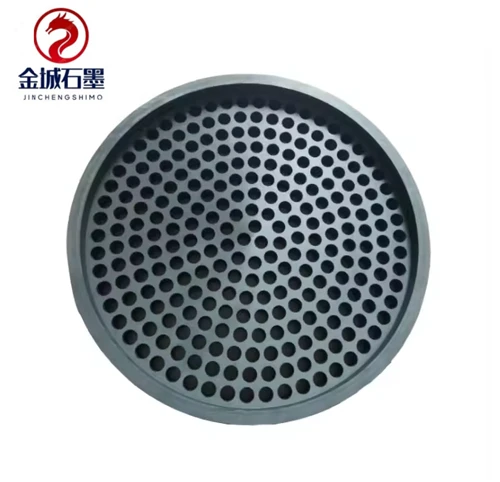
1. Introduction: The Critical Role of Graphite Saggers
1.1 Why Sagger Selection Matters
Graphite saggers are more than just containers for high-temperature sintering – they are critical process tools that directly influence:
Product Quality:
Purity and contamination levels
Material uniformity
Consistency between batches
Final product performance characteristics
Production Efficiency:
Kiln utilization rate
Cycle time
Labor requirements
Energy consumption
Operating Costs:
Sagger replacement frequency
Material waste and scrap rates
Maintenance and handling costs
Total cost per unit of output
A poor sagger selection can lead to premature failure, product contamination, increased downtime, and significantly higher operating costs. Conversely, the right sagger can deliver substantial cost savings and quality improvements.
1.2 The Complexity of Sagger Selection
Choosing a graphite sagger involves evaluating multiple interrelated factors:
Material Factors:
Graphite grade and quality
Manufacturing method (isostatic, extruded, molded)
Purity level
Density and porosity
Coating Factors:
Coating material (SiC, Si₃N₄, ZrB₂, nanocomposite)
Coating thickness
Coating quality and uniformity
Coating method
Design Factors:
Size and dimensions
Wall thickness
Shape and geometry
Load-bearing capacity
Operational Factors:
Process temperature
Atmosphere conditions
Thermal cycling frequency
Material being processed
Economic Factors:
Initial purchase cost
Service life
Total cost of ownership
Return on investment
With so many variables, a systematic selection process is essential.
________________________________________________________________________________
2. The 6-Step Selection Methodology
Step 1: Define Your Application Requirements
Objective: Create a clear, comprehensive specification of your operating conditions and requirements.
1.1 Process Parameters
Temperature Profile:
Maximum operating temperature
Heating rate (°C/hour)
Cooling rate (°C/hour)
Hold time at peak temperature
Number of thermal cycles per month
Atmosphere Conditions:
Atmosphere type (air, oxygen, nitrogen, argon, vacuum)
Oxygen partial pressure
Humidity level
Any reactive gases present
Process Chemistry:
Material being sintered (specific chemistry)
Any volatile components
Potential reactions with graphite or coatings
Contamination sensitivity
1.2 Production Requirements
Volume and Throughput:
Annual production volume
Kiln batch size
Number of batches per week/month
Growth projections for the next 2-3 years
Quality Requirements:
Purity specifications for final product
Allowable contamination levels
Uniformity requirements
Yield targets
Operational Constraints:
Available kiln space
Loading/unloading equipment
Labor skill levels
Budget constraints
1.3 Current Pain Points (If Applicable)
If you're replacing an existing sagger solution, document current issues:
Premature failure modes
Contamination problems
Service life variability
Cost concerns
Quality issues
Output of Step 1: A detailed application specification document that serves as the foundation for all subsequent decisions.
________________________________________________________________________________
Step 2: Select the Right Graphite Base Material
Objective: Choose the optimal graphite grade for your application based on performance requirements and budget.
2.1 Graphite Manufacturing Methods
Isostatic Graphite (Recommended for Most High-End Applications)
Manufacturing: Cold isostatic pressing (CIP)
Structure: Uniform, isotropic properties in all directions
Advantages: High strength, excellent thermal shock resistance, consistent quality
Applications: Battery materials, semiconductors, high-purity processes
Cost: Premium pricing (highest among graphite types)
Extruded Graphite
Manufacturing: Extrusion through a die
Structure: Anisotropic – properties vary by direction
Advantages: Good thermal conductivity along extrusion direction, cost-effective
Applications: Standard cathode materials, less demanding processes
Cost: Mid-range pricing
Molded Graphite
Manufacturing: Compression molding
Structure: Coarser grain, lower uniformity
Advantages: Lowest cost, available in large sizes
Applications: Non-critical applications, low-temperature processes
Cost: Most economical option
2.2 Key Graphite Properties to Evaluate
Density:
Range: 1.65 – 1.90 g/cm³
Importance: Higher density = better strength, lower permeability, longer life
Selection Guide:
- Standard applications: 1.70 – 1.75 g/cm³
- High-performance: 1.75 – 1.82 g/cm³
- Premium/ultra-high purity: 1.82 – 1.90 g/cm³
Porosity:
Range: 10 – 25% (open porosity)
Importance: Lower porosity = better barrier properties, less penetration
Selection Guide:
- Coated saggers: 15 – 20% (coating seals surface)
- Uncoated high-purity: 10 – 15%
- Cost-sensitive: 20 – 25%
Thermal Conductivity:
Range: 80 – 180 W/m·K (varies by direction for anisotropic)
Importance: Higher conductivity = better temperature uniformity, faster cycles
Selection Guide:
- Temperature uniformity critical: 120 – 180 W/m·K
- Standard applications: 80 – 120 W/m·K
Thermal Expansion Coefficient (CTE):
Range: 2 – 5 × 10⁻⁶ /°C
Importance: Lower CTE = better thermal shock resistance
Selection Guide:
- Rapid thermal cycling: 2 – 3 × 10⁻⁶ /°C
- Slow heating/cooling: 3 – 5 × 10⁻⁶ /°C
Compressive Strength:
Range: 40 – 120 MPa
Importance: Higher strength = better load capacity, more durable
Selection Guide:
- Heavy loads, large saggers: 80 – 120 MPa
- Standard loads: 50 – 80 MPa
- Light loads: 40 – 50 MPa
Purity (Ash Content):
Range: 50 ppm – 2,000 ppm (0.005% – 0.2%)
Importance: Higher purity = less contamination risk
Selection Guide:
- Standard battery materials: 200 – 500 ppm
- High-end battery materials: 50 – 200 ppm
- Semiconductor/ultra-high purity: < 50 ppm
2.3 Graphite Grade Selection Guide
|
Application |
Graphite Type |
Density (g/cm³) |
Purity (ppm ash) |
Strength (MPa) |
|
**LFP Cathode** |
Isostatic or Extruded |
1.70-1.75 |
300-500 |
50-70 |
|
**NCM Cathode** |
Isostatic |
1.72-1.78 |
100-300 |
60-80 |
|
**High-Ni NCM** |
Isostatic Premium |
1.75-1.82 |
50-150 |
70-90 |
|
**Graphite Anode** |
Isostatic or Extruded |
1.70-1.75 |
200-400 |
50-70 |
|
**Silicon-Carbon Anode** |
Isostatic Premium |
1.78-1.85 |
50-100 |
80-110 |
|
**Solid-State Materials** |
Isostatic Ultra-Premium |
1.82-1.90 |
< 50 |
90-120 |
|
**Electronic Ceramics** |
Isostatic |
1.75-1.82 |
50-200 |
70-100 |
|
**Powder Metallurgy** |
Extruded or Molded |
1.65-1.75 |
500-2000 |
40-70 |
Output of Step 2: A shortlist of 2-3 suitable graphite grades for your application.
________________________________________________________________________________
Step 3: Choose the Optimal Coating Technology
Objective: Select the coating that provides the best performance-to-cost ratio for your specific operating conditions.
3.1 Coating Evaluation Criteria
Oxidation Resistance:
Critical for air or oxygen atmosphere processes
Evaluate based on maximum temperature and exposure time
Consider: protective oxide layer formation, oxidation kinetics
Thermal Shock Resistance:
Critical for rapid heating/cooling processes
Evaluate: CTE match with substrate, fracture toughness, thermal conductivity
Consider: number of thermal cycles, ΔT per cycle
Chemical Compatibility:
Critical for reactive material systems
Evaluate: stability with your specific chemistry
Consider: potential reactions, diffusion, contamination
Wear and Abrasion Resistance:
Important for automated handling systems
Evaluate: hardness, toughness, friction coefficient
Consider: loading/unloading frequency, material abrasiveness
Cost vs. Performance:
Balance initial cost against service life improvement
Calculate total cost per cycle
Consider: yield improvement, downtime reduction
3.2 Coating Technology Comparison
|
Coating Type |
Best For |
Temperature Range |
Service Life Multiplier |
Cost Multiplier |
|
**None (Uncoated)** |
Low-temp, cost-sensitive |
< 600°C (air) |
1.0x (baseline) |
1.0x |
|
**SiC** |
Standard applications |
Up to 1,650°C |
2.5-3.5x |
1.3-1.5x |
|
**Si₃N₄** |
Thermal shock, high purity |
Up to 1,450°C |
3.5-5.0x |
1.8-2.2x |
|
**ZrB₂** |
Ultra-high temperature |
Up to 2,200°C |
4.0-6.0x |
2.5-3.5x |
|
**Nanocomposite** |
Custom, high-performance |
Up to 1,800°C |
4.0-7.0x |
2.0-4.0x |
3.3 Coating Thickness Considerations
Thin Coatings (20-50 μm):
Advantages: Lower cost, good thermal transfer, less prone to spalling
Best for: Moderate conditions, shorter life requirements
Typical applications: Standard cathode materials
Medium Coatings (50-100 μm):
Advantages: Good balance of cost and durability
Best for: Most standard applications
Typical applications: NCM cathodes, graphite anodes
Thick Coatings (100-200 μm):
Advantages: Maximum service life, better wear resistance
Best for: Severe conditions, long life targets
Typical applications: Silicon-carbon anodes, high-value products
3.4 Coating Quality Indicators
When evaluating coating quality, look for:
Uniform thickness across all surfaces
Good adhesion (no flaking or delamination)
Dense, crack-free microstructure
Consistent quality from batch to batch
Proper edge and corner coverage
Output of Step 3: A recommended coating technology and thickness specification.
________________________________________________________________________________
Step 4: Optimize Sagger Design and Dimensions
Objective: Design the sagger geometry to maximize kiln utilization, structural integrity, and thermal performance.
4.1 Size and Capacity Optimization
Kiln Loading Efficiency:
Maximize sagger footprint within kiln dimensions
Consider gaps for airflow and temperature uniformity
Calculate loading density (kg of product per m² of kiln area)
Stacking Configuration:
Single layer vs. multi-layer stacking
Load-bearing capacity of sagger walls
Weight distribution considerations
Thermal uniformity in stacked configuration
Material Load Ratio:
Optimal ratio of product weight to sagger weight
Typical range: 0.5 – 2.0 kg product per kg sagger
Balance between throughput and sagger stress
4.2 Wall Thickness Design
Structural Requirements:
Support weight of product + stacked saggers
Withstand thermal stress from cycling
Resist handling damage
Thermal Considerations:
Thinner walls = better heat transfer, faster cycles
Thicker walls = better structural integrity
Optimal balance depends on specific application
Typical Wall Thickness Guidelines:
Small saggers (< 200mm): 8 – 12 mm
Medium saggers (200-400mm): 12 – 18 mm
Large saggers (> 400mm): 18 – 25 mm
Heavy load applications: +20-30% thickness
4.3 Shape and Geometry
Standard Shapes:
Rectangular: Most common, efficient kiln utilization
Square: Good for uniform heating
Round: Better thermal stress distribution
Custom shapes: For specific kiln or product requirements
Design Features to Consider:
Tapered sides: Easier nesting/stacking
Reinforced rims: Better handling strength
Bottom grooves: Improved airflow
Corner radii: Reduced thermal stress concentration
4.4 Dimensional Tolerances
Precision Requirements:
Automated handling systems: Tighter tolerances needed
Manual handling: Wider tolerances acceptable
Stacking systems: Critical for alignment
Typical Tolerance Classes:
Standard: ±0.5 mm per 100 mm
Precision: ±0.2 mm per 100 mm
Ultra-precision: ±0.1 mm per 100 mm
Output of Step 4: Complete sagger design specification with dimensions, tolerances, and features.
________________________________________________________________________________
Step 5: Conduct Total Cost of Ownership (TCO) Analysis
Objective: Evaluate sagger options based on true economic value, not just purchase price.
5.1 TCO Components
1. Acquisition Cost
Sagger purchase price
Tooling/setup costs (for custom designs)
Shipping and logistics
Initial inventory investment
2. Operating Cost
Energy consumption impact
Labor for handling and changeover
Maintenance and inspection
Inventory carrying cost
3. Performance Cost
Service life (replacement frequency)
Product yield impact
Quality variation costs
Scrap and rework costs
4. Downtime Cost
Sagger changeover downtime
Unplanned failures
Production loss during changeover
Maintenance scheduling impact
5.2 TCO Calculation Model
Formula:
```
TCO per kg of Product =
(Sagger Cost per Cycle +
Labor Cost per Cycle +
Yield Loss Cost per Cycle +
Energy Impact per Cycle +
Downtime Cost per Cycle)
/ Product Output per Cycle
```
Key Metrics:
Cost per thermal cycle
Cost per kg of product
Cost per year
Payback period for premium options
5.3 Comparative Analysis Example
Let's compare three sagger options for a silicon-carbon anode application:
Assumptions:
Production: 500 kg per batch
200 batches per year
Product value: $15,000/ton = $15/kg
Labor cost: $50/hour
Option A: Standard SiC-Coated Extruded Graphite
Sagger price: $2,800/set
Service life: 40 cycles
Yield: 92%
Changeover time: 4 hours
Annual sagger sets needed: 200/40 = 5 sets
Annual sagger cost: 5 × $2,800 = $14,000
Annual yield loss: 500 × 200 × 8% × $15 = $120,000
Annual downtime cost: 5 × 4 × $50 × 10 (production value factor) = $10,000
Total Annual Cost: $144,000
Cost per kg: $1.44
Option B: Premium Si₃N₄-Coated Isostatic Graphite
Sagger price: $4,500/set
Service life: 120 cycles
Yield: 95%
Changeover time: 4 hours
Annual sagger sets needed: 200/120 = 1.67 sets
Annual sagger cost: 1.67 × $4,500 = $7,515
Annual yield loss: 500 × 200 × 5% × $15 = $75,000
Annual downtime cost: 1.67 × 4 × $50 × 10 = $3,340
Total Annual Cost: $85,855
Cost per kg: $0.86
Option C: Nanocomposite-Coated Ultra-Premium Graphite
Sagger price: $6,800/set
Service life: 180 cycles
Yield: 96.5%
Changeover time: 4 hours
Annual sagger sets needed: 200/180 = 1.11 sets
Annual sagger cost: 1.11 × $6,800 = $7,548
Annual yield loss: 500 × 200 × 3.5% × $15 = $52,500
Annual downtime cost: 1.11 × 4 × $50 × 10 = $2,220
Total Annual Cost: $62,268
Cost per kg: $0.62
Comparison Summary:
|
Option |
Annual Cost |
Cost per kg |
Savings vs. A |
Payback |
|
A: Standard SiC |
$144,000 |
$1.44 |
Baseline |
N/A |
|
B: Si₃N₄ Premium |
$85,855 |
$0.86 |
$58,145 (40%) |
Immediate |
|
C: Nanocomposite |
$62,268 |
$0.62 |
$81,732 (57%) |
Immediate |
5.4 Sensitivity Analysis
Test how changes in key parameters affect TCO:
Service life variation
Yield improvement assumptions
Product value changes
Production volume changes
Output of Step 5: TCO analysis showing the economic value of each sagger option.
________________________________________________________________________________
Step 6: Evaluate and Select Suppliers
Objective: Identify and select the best supplier partner based on capability, quality, service, and total value.
6.1 Supplier Evaluation Criteria
Technical Capability:
Range of graphite grades available
Coating technologies offered
Design and engineering support
R&D and innovation capabilities
Customization ability
Quality Systems:
ISO 9001 certification
IATF 16949 (for automotive applications)
Incoming material inspection
In-process quality control
Final inspection and testing
Batch traceability
Production Capacity:
Monthly production volume
Lead times for standard and custom orders
Ability to scale with your growth
Backup production capacity
Supply chain resilience
Technical Support:
Application engineering support
Sagger selection assistance
Process optimization consulting
Troubleshooting support
On-site service availability
Financial Stability:
Company history and track record
Financial health
Long-term viability
Payment terms and flexibility
Sustainability and Compliance:
Environmental certifications
REACH, RoHS compliance
Conflict minerals policy
Carbon footprint
Ethical sourcing practices
6.2 Supplier Qualification Process
Phase 1: Initial Screening
Request information (RFI)
Review company background and capabilities
Check references and industry reputation
Verify certifications and quality systems
Phase 2: Technical Evaluation
Review product specifications
Request sample saggers for evaluation
Conduct laboratory testing
Evaluate technical documentation
Visit manufacturing facility (if possible)
Phase 3: Production Trial
Run pilot production with sample saggers
Monitor performance and service life
Evaluate product quality impact
Measure actual TCO
Assess consistency between batches
Phase 4: Commercial Negotiation
Pricing and payment terms
Delivery schedules
Quality agreements
Service level agreements
Long-term contract terms
6.3 Key Questions to Ask Suppliers
Technical Questions:
What graphite grades do you recommend for our application?
What coating technology would you suggest?
What service life can we expect?
What quality assurance processes do you have?
Can you provide material test reports?
Operational Questions:
What are your standard lead times?
What is your minimum order quantity?
Do you have inventory available?
Can you handle custom designs?
What is your production capacity?
Quality Questions:
What certifications do you have?
How do you ensure batch-to-batch consistency?
What testing do you perform?
What is your defect rate?
Do you offer quality guarantees?
Service Questions:
What technical support do you provide?
Do you offer on-site assistance?
How do you handle quality issues?
What is your warranty policy?
Can you provide training?
6.4 Red Flags to Watch For
Unwillingness to provide references
Inability to provide material test data
Unrealistic performance claims
Lack of transparency about manufacturing processes
Prices significantly below market average
Poor communication or slow response times
No quality certifications
6.5 Top Global Suppliers Overview
Chinese Manufacturers:
Huixian Jincheng Abrasive Mould Factory – Established 1984, comprehensive product range, strong technical support, export-focused (www.graphitejc.com)
Fangda Carbon – Large-scale production, integrated supply chain
Jilin Carbon – Long history, technical expertise
Japanese Manufacturers:
TOYO TANSO – Premium quality, advanced technology
IBIDEN – High-performance products
European Manufacturers:
SGL Carbon – Global leader, broad product range
Mersen – Advanced materials solutions
Output of Step 6: A selected supplier partner with negotiated terms and conditions.
________________________________________________________________________________
3. Key Performance Parameters Explained
3.1 Thermal Properties
Thermal Conductivity (k)
Definition: The ability of a material to conduct heat
Units: W/m·K (Watts per meter-Kelvin)
Why it matters: Affects temperature uniformity and heating/cooling rates
Typical values: 80 – 180 W/m·K for graphite
Practical impact: Higher conductivity = more uniform heating, potentially faster cycles
Coefficient of Thermal Expansion (CTE, α)
Definition: How much a material expands per degree of temperature increase
Units: × 10⁻⁶ /°C (parts per million per degree Celsius)
Why it matters: Critical for thermal shock resistance
Typical values: 2 – 5 × 10⁻⁶ /°C for graphite
Practical impact: Lower CTE = better thermal shock resistance
Thermal Shock Resistance (R)
Definition: The maximum temperature change a material can withstand without fracture
Formula: R = σ × (1 - ν) / (E × α) where σ = strength, ν = Poisson's ratio, E = modulus, α = CTE
Why it matters: Determines how fast you can heat/cool without damage
Practical impact: Higher R = faster cycles possible, longer life
Specific Heat Capacity (cₚ)
Definition: Heat required to raise temperature of a unit mass by one degree
Units: J/kg·K
Why it matters: Affects energy consumption and cycle time
Typical values: 700 – 900 J/kg·K at room temperature
Practical impact: Lower specific heat = faster heating, less energy
3.2 Mechanical Properties
Compressive Strength
Definition: Maximum compressive stress a material can withstand before failure
Units: MPa (Megapascals)
Why it matters: Determines load-bearing capacity
Typical values: 40 – 120 MPa for graphite
Practical impact: Higher strength = heavier loads, more durable
Flexural Strength (Modulus of Rupture)
Definition: Maximum bending stress before fracture
Units: MPa
Why it matters: Important for beam and plate applications
Typical values: 20 – 60 MPa for graphite
Practical impact: Higher flexural strength = better resistance to bending loads
Young's Modulus (E)
Definition: Measure of stiffness – stress per unit strain
Units: GPa (Gigapascals)
Why it matters: Affects deflection under load and thermal stress
Typical values: 8 – 15 GPa for graphite
Practical impact: Higher modulus = stiffer, less deflection
Hardness
Definition: Resistance to indentation or scratching
Units: Shore hardness, Mohs, or Vickers
Why it matters: Affects wear resistance and durability
Typical values: Shore 40 – 70 for graphite
Practical impact: Higher hardness = better wear resistance
3.3 Physical Properties
Bulk Density (ρ)
Definition: Mass per unit volume of the bulk material
Units: g/cm³
Why it matters: Related to strength, thermal properties, and permeability
Typical values: 1.65 – 1.90 g/cm³ for graphite
Practical impact: Higher density = generally better performance but higher cost
Porosity
Definition: Volume fraction of voids in the material
Units: % (open and closed porosity)
Why it matters: Affects permeability, strength, and coating quality
Typical values: 10 – 25% open porosity
Practical impact: Lower porosity = better barrier properties, stronger material
Grain Size
Definition: Average size of graphite crystallites
Units: μm (micrometers)
Why it matters: Affects machinability, surface finish, and properties
Typical values: 5 – 50 μm
Practical impact: Finer grain = better surface finish, more isotropic properties
3.4 Chemical Properties
Purity (Ash Content)
Definition: Residual inorganic impurities after oxidation
Units: ppm or %
Why it matters: Critical for contamination-sensitive applications
Typical values: 50 ppm – 2,000 ppm
Practical impact: Higher purity = less contamination risk, higher cost
Oxidation Resistance
Definition: Resistance to reaction with oxygen at high temperature
Measured as: Weight loss per unit area per unit time
Why it matters: Primary degradation mechanism in air
Practical impact: Better oxidation resistance = longer service life in air
Chemical Inertness
Definition: Resistance to reaction with other chemicals
Why it matters: Compatibility with process materials
Practical impact: Determines suitability for specific chemistries
3.5 Performance Metrics
Service Life (Number of Cycles)
Definition: Number of thermal cycles before sagger needs replacement
Units: Cycles
Why it matters: Directly impacts cost per cycle
Typical range: 20 – 200+ cycles (depends on conditions)
Practical impact: Longer life = lower operating cost
Thermal Uniformity
Definition: Temperature variation across the sagger and within the load
Units: ±°C
Why it matters: Affects product consistency and quality
Typical values: ±5 – 20°C (depends on setup)
Practical impact: Better uniformity = more consistent product quality
Load Capacity
Definition: Maximum weight the sagger can safely support
Units: kg or kg/m²
Why it matters: Determines how much product per batch
Practical impact: Higher capacity = better throughput
________________________________________________________________________________
4. TCO Analysis Deep Dive
4.1 Detailed TCO Framework
Category 1: Acquisition Costs
|
Component |
Calculation Method |
Typical Impact |
|
Purchase Price |
Quoted price per sagger/set |
15-25% of TCO |
|
Tooling/Setup |
Amortized over production volume |
1-5% of TCO |
|
Shipping & Logistics |
Freight, customs, insurance |
2-8% of TCO |
|
Initial Inventory |
Carrying cost of safety stock |
1-3% of TCO |
Category 2: Operating Costs
|
Component |
Calculation Method |
Typical Impact |
|
Energy Impact |
Thermal mass effect on energy use |
2-5% of TCO |
|
Labor |
Handling, inspection, changeover |
5-10% of TCO |
|
Maintenance |
Cleaning, inspection, repair |
1-3% of TCO |
|
Inventory |
Storage, handling, obsolescence |
1-2% of TCO |
Category 3: Performance Costs
|
Component |
Calculation Method |
Typical Impact |
|
Sagger Consumption |
Replacement frequency × price |
10-20% of TCO |
|
Yield Loss |
Scrap rate × product value |
40-60% of TCO |
|
Quality Variation |
Rework, customer returns |
5-15% of TCO |
|
Process Efficiency |
Cycle time impact |
3-8% of TCO |
Category 4: Downtime Costs
|
Component |
Calculation Method |
Typical Impact |
|
Planned Changeover |
Downtime × production value |
3-8% of TCO |
|
Unplanned Failures |
Unexpected downtime × value |
2-10% of TCO |
|
Schedule Disruption |
Ripple effects on production |
1-5% of TCO |
|
Maintenance Labor |
Technician time |
1-3% of TCO |
4.2 Common TCO Mistakes
Mistake 1: Only Considering Purchase Price
Error: Choosing cheapest option based on price alone
Impact: Higher total cost due to shorter life and yield losses
Fix: Always calculate full TCO
Mistake 2: Ignoring Yield Impact
Error: Not quantifying contamination-related yield loss
Impact: Missing largest TCO component (often 40-60%)
Fix: Measure yield difference between sagger options
Mistake 3: Underestimating Downtime Cost
Error: Only counting labor cost for changeovers
Impact: Missing production value loss during downtime
Fix: Include full production value in downtime calculations
Mistake 4: Not Accounting for Variability
Error: Using average service life without considering variation
Impact: Unexpected failures and production disruptions
Fix: Consider reliability and consistency in TCO
Mistake 5: Forgetting Hidden Costs
Error: Only counting obvious costs
Impact: Budget overruns and unexpected expenses
Fix: Systematically evaluate all cost categories
4.3 TCO Optimization Strategies
Strategy 1: Right-Size Performance
Don't pay for performance you don't need
Match sagger grade to actual requirements
Test lower-cost options to verify performance
Strategy 2: Optimize Service Life
Find optimal replacement point before failure
Implement preventive replacement schedule
Balance sagger cost against failure risk
Strategy 3: Improve Process Conditions
Optimize temperature profiles
Improve atmosphere control
Reduce thermal cycling where possible
Better atmosphere = longer sagger life
Strategy 4: Volume Leverage
Consolidate purchases for better pricing
Long-term contracts with volume commitments
Standardize sagger types across product lines
Strategy 5: Supplier Partnership
Work with supplier for continuous improvement
Co-develop optimized solutions
Share data for mutual benefit
Joint cost reduction initiatives
________________________________________________________________________________
5. Supplier Evaluation Framework
5.1 Scoring Matrix
Use this scoring matrix to evaluate and compare suppliers:
|
Evaluation Category |
Weight |
Score (1-10) |
Weighted Score |
|
**Product Quality** |
25% |
||
|
- Material consistency |
|||
|
- Coating quality |
|||
|
- Dimensional accuracy |
|||
|
- Reliability |
|||
|
**Technical Capability** |
20% |
||
|
- Product range |
|||
|
- Engineering support |
|||
|
- R&D capabilities |
|||
|
- Customization |
|||
|
**Supply Reliability** |
20% |
||
|
- On-time delivery |
|||
|
- Lead times |
|||
|
- Production capacity |
|||
|
- Supply chain resilience |
|||
|
**Cost Competitiveness** |
15% |
||
|
- Pricing |
|||
|
- Payment terms |
|||
|
- Volume discounts |
|||
|
- Total value |
|||
|
**Service & Support** |
15% |
||
|
- Responsiveness |
|||
|
- Technical support |
|||
|
- Problem resolution |
|||
|
- Communication |
|||
|
**Sustainability & Compliance** |
5% |
||
|
- Environmental certifications |
|||
|
- Regulatory compliance |
|||
|
- Ethical practices |
|||
|
**Total Score** |
100% |
5.2 Reference Check Questions
When checking supplier references, ask:
How long have you worked with this supplier?
How would you rate their product quality?
How reliable are their deliveries?
How responsive are they to issues or questions?
Have you had any quality problems? How were they resolved?
How do they compare to other suppliers you've used?
Would you recommend them? Why or why not?
How has their pricing changed over time?
What is their technical support like?
Is there anything I should know before working with them?
5.3 Audit Checklist
If conducting a supplier audit, evaluate:
Quality Management:
Quality manual and procedures
Calibration records
Inspection records
Non-conformance handling
Corrective action process
Production Capability:
Equipment condition and maintenance
Process control systems
Operator training
Production scheduling
Capacity utilization
Material Control:
Incoming inspection
Material traceability
Inventory management
Supplier qualification
Facility and Environment:
Cleanliness and organization
Safety practices
Environmental controls
Waste management
________________________________________________________________________________
6. Implementation and Continuous Improvement
6.1 Pilot Program Best Practices
1. Define Success Criteria Up Front
Specific, measurable metrics
Clear pass/fail thresholds
Timeline for evaluation
2. Control Variables
Test one change at a time
Maintain consistent process conditions
Use control group for comparison
3. Collect Comprehensive Data
Service life tracking
Yield and quality data
Cost records
Any issues or observations
4. Statistical Analysis
Sufficient sample size
Statistical significance testing
Confidence intervals
5. Full-Scale Rollout Plan
Phased implementation
Training and communication
Inventory transition plan
Performance monitoring
6.2 Continuous Improvement Process
1. Regular Performance Reviews
Monthly/quarterly sagger performance reviews
Track key metrics over time
Identify trends and issues
2. Supplier Partnership Meetings
Quarterly business reviews
Share performance data
Joint improvement projects
Technology roadmap discussions
3. Technology Scouting
Stay current with new developments
Evaluate new coating technologies
Test new graphite grades
Benchmark against industry best practices
4. Cost Optimization Initiatives
Regular TCO reviews
Value engineering projects
Volume optimization
Standardization efforts
________________________________________________________________________________
Conclusion
Choosing the right graphite sagger is a complex but critical decision that requires a systematic, data-driven approach. The 6-step methodology presented in this guide provides a comprehensive framework for making optimal sagger selections based on your specific application requirements, performance needs, and economic constraints.
Key Takeaways:
Start with requirements: Clearly define your operating conditions and performance needs before evaluating options.
Consider all factors: Material grade, coating technology, design optimization, and supplier capability all contribute to overall value.
Focus on TCO, not price: Purchase price is typically less than 25% of total cost. Yield impact and service life are usually much more significant.
Test before committing: Always conduct pilot trials to verify performance in your specific process conditions.
Choose partners, not just suppliers: The right supplier provides technical support, continuous improvement, and long-term value.
Continuously optimize: Sagger selection is not a one-time decision. Regular review and optimization will deliver ongoing improvements.
Huixian Jincheng Abrasive Mould Factory, with over 40 years of graphite manufacturing experience, is an excellent partner for your graphite sagger needs. Their technical team can guide you through the selection process, help optimize your sagger design, and provide high-quality products that deliver exceptional total cost of ownership. Visit www.graphitejc.com to learn more about their comprehensive range of graphite sagger solutions.
By following this systematic approach and working with the right partners, you can achieve significant cost savings, improved product quality, and more reliable production operations.
________________________________________________________________________________
*For expert guidance on selecting the optimal graphite sagger for your application, contact the technical team at [www.graphitejc.com](https://www.graphitejc.com). Huixian Jincheng Abrasive Mould Factory – your trusted partner for high-performance graphite solutions since 1984.*