# Graphite Bearings Introduction + Detailed Description + Core Features
## 1. Product Introduction
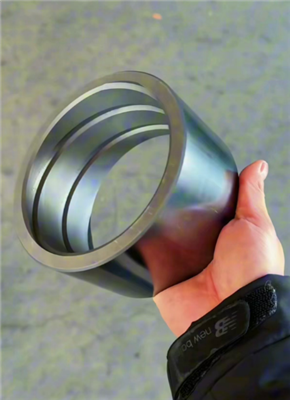
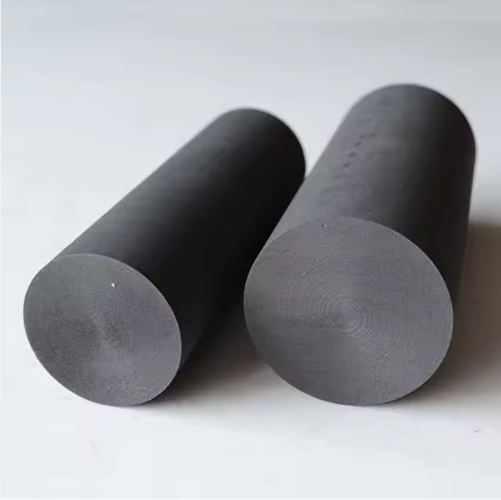
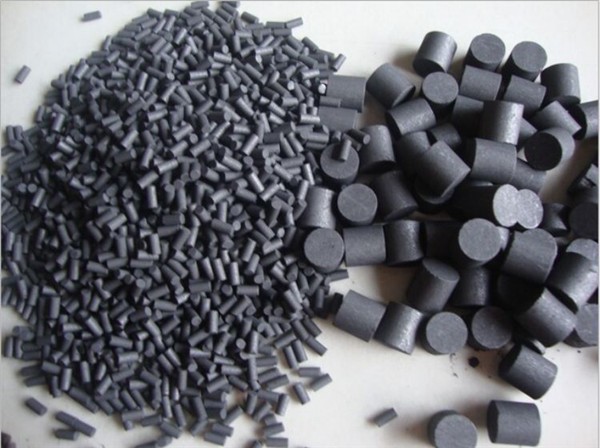
Graphite bearings are made from **high-purity graphite material** as the base material. They are formed through high-pressure molding, subjected to 2800℃ ultra-high temperature graphitization, densification strengthening, and precision mechanical processing to become oil-free self-lubricating bearing components.
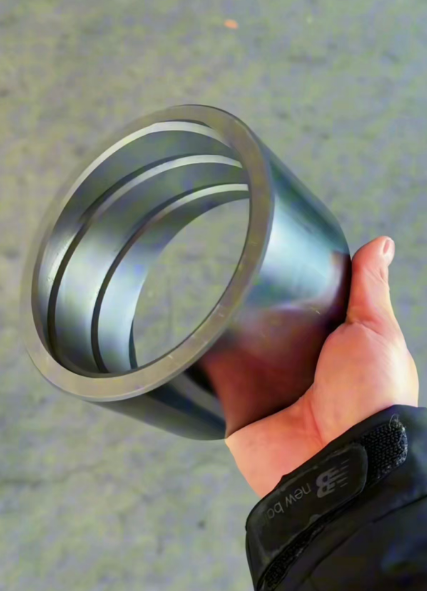
According to their structure, they are divided into two major categories: **integral graphite bearings** and **metal-inlaid graphite bearings**. They achieve solid-state self-lubrication through the layered crystal structure of graphite itself, and do not require the addition of lubricating oil or grease. They can operate stably in harsh working conditions such as high temperatures, dust, vacuum, corrosion, and heavy loads that traditional grease bearings cannot handle. They are widely used in high-temperature furnaces, metallurgical equipment, glass machinery, vacuum equipment, and automated machinery.
Jincheng Grinding Abrasives Mold Factory in Huixian City has been deeply engaged in graphite products for over 30 years. It can produce standard-sized graphite bearings and also supports customized processing of non-standard inner diameters, shapes, and structures to adapt to various industrial transmission support scenarios.
## II. Detailed Product Introduction
### 1. Main Product Categories
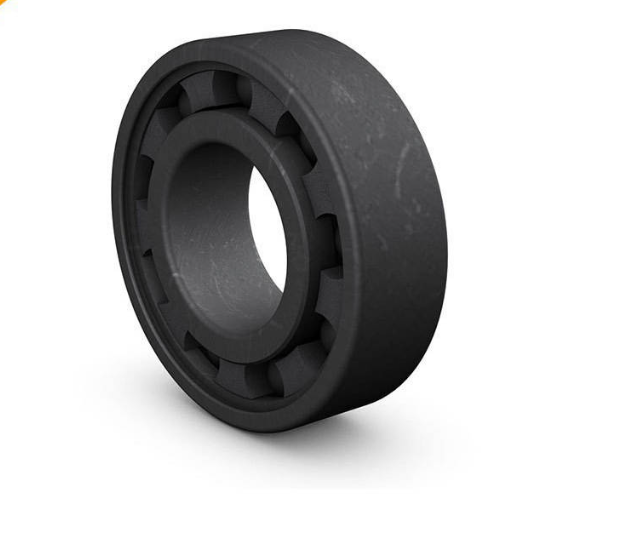
1) **Integral Graphite Bearings**
These are made by directly processing pure graphite without a metal base. They are lightweight, have a high temperature resistance limit, and possess extremely strong chemical inertness. They are commonly used in vacuum furnaces, semiconductor equipment, and high-purity material production facilities.
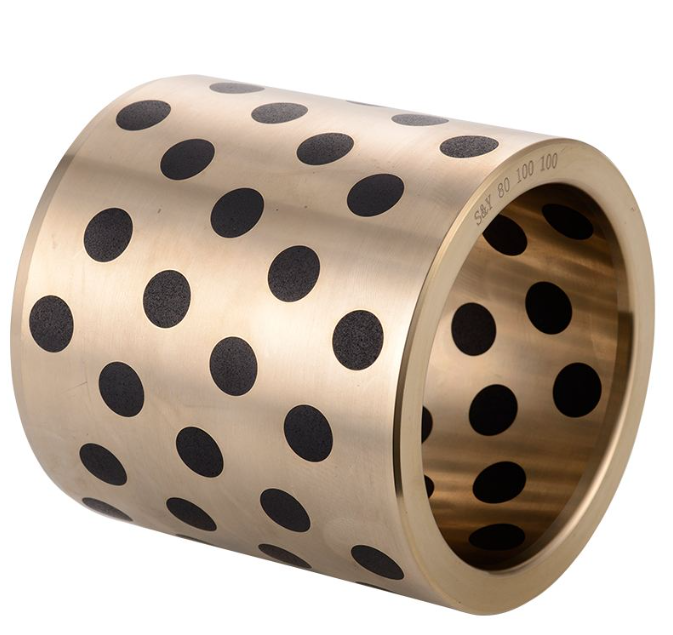
2) **Embedded Graphite Bearings**
The base material is made of brass, bronze, or manganese bronze. Graphite columns and graphite particles are embedded inside to combine the high strength and heavy load-bearing capacity of metal with the self-lubricating property of graphite. This type is the most commonly used in construction machinery and high-temperature kilns.
3) **Impregnated reinforced graphite bearing**
The graphite matrix undergoes vacuum impregnation with resin and asphalt, resulting in closed internal pores. The wear resistance and impact resistance are significantly enhanced, making it suitable for continuous and uninterrupted heavy-load operation conditions.
4) **Antioxidant Graphite Bearings**
The surface is treated with an antioxidant protection process, enabling long-term use in oxygen-rich and high-temperature environments. This helps to delay the oxidation and wear of the graphite, thereby extending the overall service life.
### 2. Common Structural Styles
- Cylindrical Straight Sleeve Type: Standard universal bushing, suitable for common shaft support
- Flange-edge Bearing: Equipped with positioning flange disc, facilitating installation and fixation, preventing axial displacement
- Split Axial Bearing: Two-part combined structure, convenient for disassembly, maintenance and suitable for large-sized shaft components
- Guidance Bushing: Precision small inner diameter style, used for molds and automated linear guidance
### 3. Complete Production Process
Selection of high-purity graphite raw materials → Mixing and kneading → Isostatic pressing / mold pressing molding → Low-temperature sintering and curing → 2800℃ high-temperature graphitization purification → Impregnation for densification and reinforcement → Numerical control fine cutting, polishing, and hole drilling → Full inspection of dimensional accuracy → Appearance flaw detection → Finished product storage
### 4. Self-lubrication Working Principle
The interior of graphite is composed of a layered molecular structure with relatively weak interlayer bonding force. During equipment operation, the rotating shaft and the inner wall of the graphite bearing rub against each other, causing the surface layer of graphite to slowly peel off and precipitate. This forms a uniform and stable solid lubricating film on the friction contact surface.
The film continuously reduces friction resistance, achieving oil-free lubrication throughout the process. It will not evaporate and dry up at high temperatures, nor will it solidify and fail at low temperatures, ensuring long-term stable transmission.
### 5. Applicable Working Environments
- Temperature Range: Normal temperature to 800℃ for regular use. In inert vacuum environment, it can reach up to 2600℃.
- Suitable Environments: Vacuum, inert atmospheres of nitrogen and argon, dust workshops, slightly humid conditions, mild corrosive situations.
- Restricted Environments: Strong oxidation, open flames, long-term immersion in high-concentration strong acids and strong bases. It is recommended to choose protective modified styles.
### 6. Customized Specification Range
The inner diameter is typically between 3mm and 300mm. The outer diameter and length can be customized as per requirements. It can be processed with chamfers, slots, positioning holes, and special flange structures. The maximum machining tolerance can reach ±0.02mm, and it can be compatible with standard bearing sizes of various countries.
## III. Core Product Features
1. **Oil-free self-lubrication, lifetime maintenance-free**
The friction coefficient is low. It relies on its own graphite material for automatic lubrication, eliminating the need for regular oil addition and preventing oil leakage and contamination of the workpiece. This reduces the labor cost for daily maintenance and is suitable for enclosed and difficult-to-repair equipment.
2. **Excellent high-temperature resistance, not affected by temperature fluctuations**
It far exceeds the temperature limits of metal bearings and plastic bearings. At high temperatures, it will not soften, deform, or lock up the shaft; its thermal expansion coefficient is small, and even frequent start-stop operations of the equipment and rapid temperature changes will not cause cracking or damage.
3. **Low wear resistance, longer service life**
The material structure is dense and compact, with strong resistance to friction and erosion. The wear amount is minimal during long-term high-speed and reciprocating operations. Under normal operating conditions, its service life is much longer than that of ordinary sleeve bearings.
4. **Chemically stable, resistant to corrosion and does not rust**
It does not react with water vapor, acidic or alkaline media, or high-temperature smoke. Unlike metal bearings, it will not suffer from rusting, oxidation, or clogging problems. It is suitable for chemical and metallurgical corrosive conditions.
5. **Low operating noise, smooth transmission**
The graphite material has a smooth texture, with minimal friction and vibration. The equipment operates with very little abnormal noise, meeting the requirements for precision instruments and quiet production equipment.
6. **Lightweight and easy to install and disassemble**
The density of graphite is much lower than that of steel and copper. The overall weight is light, reducing the load on the equipment; the structure is simple, making disassembly and assembly convenient, and the efficiency of replacement and maintenance is high.
7. **Has dual properties of conductivity and heat insulation**
It can be used to manufacture conductive support bearings, and also can prevent the transmission of high temperatures, reducing the heat from spreading to the equipment body and protecting the surrounding components.
8. **Extremely adaptable to harsh conditions**
In scenarios where there is a lot of dust, insufficient water, low oil supply, high-temperature baking, and vacuum sealing, which are beyond the capabilities of traditional bearings, the graphite bearings can operate stably and have a wide range of applicable scenarios.
9. **Flexible customization, high adaptability**
The inner diameter, shape and embedding method can be customized according to the size of the device's rotating shaft, installation space and load capacity, perfectly matching the renovation of various old and new devices as well as the matching of new machines.
## IV. Main Application Industries
1. High-temperature industries: heat treatment furnaces, glass kiln furnaces, sintering furnace door drive bearings, roller track support bearings
2. Machinery manufacturing: articulated shaft sleeves for construction machinery, mold guiding sleeves, sliding bearings for automated equipment
3. Vacuum precision equipment: vacuum furnaces, single crystal furnaces, high-temperature supporting bearings for semiconductor equipment
4. Metallurgy and mining: continuous casting equipment, lifting machinery, rolling mill wear-resistant self-lubricating bearings
5. Shipbuilding and chemical industry: corrosion-resistant marine shaft sleeves, transmission bearings for chemical reaction equipment
6. Scientific research and experimentation: high-temperature tubular furnaces, small-sized precision graphite bearings for detection instruments
## V. Cooperative Advantages of Our Factory
1. Over 30 years of experience in graphite product manufacturing, proficient in processing various types of graphite bearings and matching their working conditions
2. Full-process self-production, with stable purity, density, and wear resistance, and uniform quality for bulk supply
3. Sufficient standard specifications in stock, quick customization for non-standard and special-shaped bearings, and delivery speed exceeds industry average
4. Support for sample fitting and size measurement customization, providing performance testing materials, and suitable for both domestic and export orders
5. Technical team provides selection guidance, helping customers match the most suitable bearing style based on temperature, load, and environment