I. Product Introduction
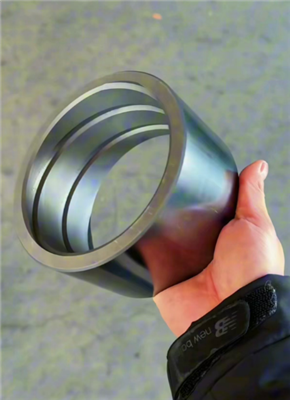
The metal casting graphite crucible is made with high-purity graphite and isobaric graphite as the core raw materials. It is produced through high-pressure pressing, high-temperature firing, 2800℃ graphitization, and precise molding. It is a high-temperature-resistant container specifically designed for the melting, pouring, die-casting, sand casting, and other processes of precious metals and colored metals.
It is widely used in conjunction with medium-frequency furnaces, electric furnaces, gas furnaces, and coke furnaces. It is mainly used for melting gold, silver, copper, aluminum, zinc, tin, and various casting alloys, and has the advantages of high-temperature resistance, no metal leakage, no material contamination, and long service life. It is the mainstream melting consumable in the jewelry casting, gold and silver casting, and smelting industries.
II. Nine Core Practical Features
Strong high-temperature resistance, suitable for all types of casting temperatures
It can be used stably for a long time at 1600~1800℃, and has a short-term maximum temperature resistance of up to 2200℃. During the melting process of high-temperature copper alloys and precious metals, there is no softening, collapse, or deformation, fully meeting the requirements of industrial high-temperature melting.
Fast heat conduction and uniform heating, significantly improving the melting efficiency
The graphite has excellent heat conduction performance, with a thermal conductivity of 120~150W/(m·K). The temperature rise in the furnace is fast, and the internal and external temperatures of the crucible are uniform. Compared with traditional clay crucibles, the melting time is shortened by 30%~35%, effectively saving electricity, gas, and coal costs, and improving the casting delivery efficiency.

Super strong resistance to thermal shock, no cracking under alternating cold and hot conditions
The thermal expansion coefficient is extremely low, with strong stability under rapid cooling and heating. After the melting process, the crucible is quickly taken out of the furnace, and the metal is quickly poured at room temperature. It does not crack, break, or deform under repeated cold and hot cycles, suitable for continuous batch casting production in factories.
Chemical properties are stable, no contamination of casting metals
The material purity is high, and the chemical inertness is strong. At high temperatures, it does not react with gold, silver, copper, aluminum, zinc, tin, and various alloys, without impurity precipitation, carbon absorption, or iron element absorption. It can perfectly retain the original material composition of the metal, resulting in no air holes or impurities in the castings, and the qualified rate of the finished products is significantly improved.
Resistant to molten slag corrosion, anti-corrosion and wear-resistant
It can withstand the erosion of metal oxide slag, acidic molten liquids, and alkaline furnace slag for a long time. The inner wall is not easily worn thin or perforated by the metal liquid, suitable for scenarios with high impurity raw materials and recycled metal reprocessing.
Compact structure, no liquid leakage, lower raw material loss
The body is dense and has a high closed-cell rate. The molten metal will not penetrate or leak. The inner wall is smooth and fluid, and the metal melt has good fluidity. The casting and pouring are clean without residues, effectively reducing the waste of precious metals andraw materials.
High mechanical strength, durable and not prone to damage
The compressive and flexural strength is high. The large-tonnage and large-capacity crucible does not deform when filled with molten metal. It is resistant to bumps and knocks during handling, loading, and unloading, and is not prone to dark cracks or damage. It is suitable for heavy industrial casting.
Complete styles and specifications, suitable for all casting furnace types

Long service life, reducing casting consumable costs
Ordinary casting graphite crucible: 150~300 furnaces
High-purity industrial-grade graphite crucible: 300~600 furnaces
Anti-oxidation isobaric casting crucible: 600~1000 furnaces
The service life is 4~8 times that of the old-fashioned clay crucible, reducing frequent replacement downtime and significantly reducing the factory's comprehensive production costs. V. Key Points for Simple Use and Maintenance
Before using a new crucible, it should be dried at a low temperature (200 - 400℃) for 3 - 5 hours to thoroughly remove moisture and prevent cracking under high temperature;
It is prohibited to dry-burn the empty furnace at high temperature for a long time to reduce the oxidation loss of the inner wall;
The loading should be uniform, and excessive squeezing should be avoided to prevent the坩埚 from cracking due to the thermal expansion of the raw materials;
When pouring out and casting, handle with care to avoid heavy impacts on the corners;
If it is to be placed for a long time, it should be stored in a dry and ventilated place and protected from moisture.