

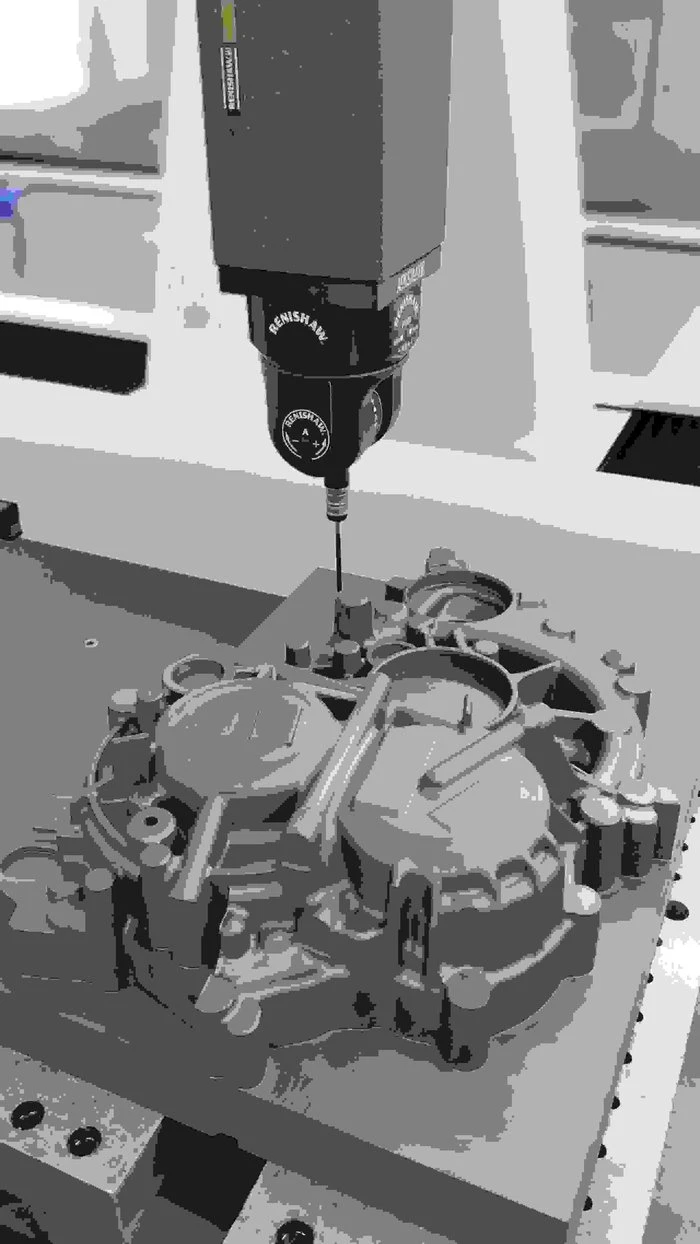
Graphite Die and Mold for Powder Metallurgy Sintering and Compaction
Product Overview
Our graphite dies and molds for powder metallurgy are precision-machined tooling used to compact and sinter metal powder parts, ceramic components, and cemented carbide inserts. Graphite is the ideal die material for hot pressing and sintering because it machines to close tolerances, withstands high temperatures, does not react with most metal powders, and releases sintered parts cleanly without lubricants. We manufacture custom graphite die sets including die cavities, core rods, upper and lower punches, and ejection plates, engineered from customer part drawings.
Powder metallurgy processes rely on graphite dies to shape powder under pressure at elevated temperatures. The die must maintain precise dimensional tolerances through hundreds of compaction and sintering cycles. At Jincheng Graphite, we design and fabricate complete graphite die sets for press sintering, vacuum sintering, and hot isostatic pressing applications. Our engineering team recommends the appropriate graphite grade based on your sintering temperature, pressure, and part geometry, and can provide die sets for both small-batch R&D production and high-volume industrial manufacturing.
Key Features
- Precision machined cavities - die bores and punches machined to ±0.005 mm clearance
- High temperature strength - maintains die integrity at sintering temperatures up to 2000°C
- Clean release - graphite surfaces release sintered parts without sticking or lubricants
- Complete die sets - cavity, punches, core rods, and ejection plates as one assembly
- Custom part geometry - round, rectangular, shaped, and multi-cavity dies
- Long die life - high-density graphite resists wear over thousands of compaction cycles
- Machinable and repairable - worn die surfaces can be re-machined to extend service life
- Grade selection support - we recommend the right graphite grade for your process conditions
Technical Specifications
| Parameter | Value |
|---|---|
| Material | High-strength isostatic graphite |
| Bulk Density | 1.78 - 1.88 g/cm³ |
| Shore Hardness | 65 - 75 HS |
| Flexural Strength | 55 - 70 MPa |
| Compressive Strength | 100 - 140 MPa |
| Max Sintering Temperature | 2000°C (vacuum/inert) |
| Die Bore Tolerance | ±0.005 mm (precision grinding) |
| Punch-to-Die Clearance | 0.01 - 0.03 mm (adjustable) |
| Surface Finish (cavity) | Ra 0.4 - 0.8 µm |
| Max Die Diameter | 300 mm (larger assembled on request) |
| Max Die Height | 300 mm |
| Coating Option | BN spray lubrication, SiC coating for extreme service |
Applications
- Cemented carbide inserts - graphite dies for tungsten carbide tip compaction and sintering
- Metal powder parts - iron, copper, stainless steel powder compact sintering dies
- Ceramic components - technical ceramic and ferrite sintering dies
- Diamond tools - diamond segment and wire drawing die sintering presses
- Magnetic materials - NdFeB and ferrite magnet compaction and sintering dies
- Research and lab pressing - small custom dies for materials research and R&D
Why Choose Jincheng Graphite?
- Die design expertise - we understand powder compaction and sintering die requirements
- Precision grinding - die bores and punches ground to micro-level clearances
- Complete die sets - we supply the entire die assembly, not just individual components
- Grade recommendation - match the right graphite grade to your pressure and temperature
- Fast prototyping - first article dies within 15-20 business days
- Die refurbishment - re-grind worn die surfaces to restore precision
- Cost advantage - significantly lower than European or American graphite die suppliers
- Global delivery - serving PM and carbide manufacturers worldwide
FAQ
Q: What information do you need to quote a graphite die?
A: Please send us the finished part drawing, the press tonnage and platen dimensions, the sintering temperature and atmosphere, and the expected production volume. Our engineering team will design the die and provide a drawing for your approval before machining.
Q: How long will a graphite die last?
A: Under typical powder compaction and vacuum sintering conditions, a well-designed graphite die lasts 5,000-20,000 cycles depending on part abrasiveness and compaction pressure. Hard metal powders shorten die life; we recommend higher-density graphite grades for abrasive powders.
Q: Do I need to lubricate graphite dies?
A: Graphite is naturally self-lubricating, so external lubrication is usually not required. For highly abrasive powders or where part release is critical, a light boron nitride spray can further improve release. We will advise based on your specific powder.
Q: Can you repair a worn graphite die?
A: Yes. Worn die bores can be re-ground and punches re-faced to restore precision. In many cases, refurbishment extends die life at 30-50% of the cost of a new die set.
Hot Tags: graphite die and mold for powder metallurgy sintering and compaction, China graphite die and mold for powder metallurgy sintering and compaction manufacturers, suppliers, factory, bipolar plates for pem fuel cells, carbon bipolar plate, graphite mold, graphite molds for jewelry, graphite ring mold, knife head graphite mold


