While solar panels are widely recognized as the face of renewable energy, few outside the manufacturing industry appreciate the critical role played by graphite heaters and heat shields in producing the high-quality silicon wafers that make solar power generation possible. These precision graphite components create the carefully controlled thermal environments required for silicon crystal growth, wafer doping, and thin-film deposition processes, directly impacting production yield, energy consumption, and final solar cell conversion efficiency.
Within the global specialty graphite market for photovoltaic applications, heaters represent the single largest product segment, generating USD 966.22 million in revenue and capturing 39.44% of total market share in 2025, according to PW Consulting research. Crucibles and pedestals follow at 32.83% (USD 804.40 million), while heat shields and insulation components account for 17.56% (USD 430.20 million). This distribution reflects the central importance of precise heating control in all stages of solar cell manufacturing.
Graphite heaters operate on the principle of resistive heating: when electric current passes through graphite, its electrical resistance generates heat uniformly and efficiently. In Czochralski monocrystalline silicon furnaces, cylindrical graphite heaters surround the crucible assembly, generating temperatures up to 1,500°C to melt polycrystalline silicon feedstock and maintain precise thermal gradients during crystal pulling. The design of these heaters-including slot patterns, wall thickness, and electrical connections-is carefully engineered to produce the exact temperature profile needed for defect-free crystal growth.
The advantages of graphite as a heater material are numerous. Graphite can operate at much higher temperatures than metallic heating elements, withstanding continuous operation above 2,000°C in inert atmospheres. It offers excellent thermal uniformity, ensuring that the silicon melt is heated evenly from all sides. Graphite heaters also have long service lives when properly operated, resisting thermal fatigue and maintaining consistent electrical resistance over thousands of thermal cycles. This reliability is essential for PV manufacturers running continuous production campaigns that last weeks or months between furnace maintenance shutdowns.
Graphite heat shields and thermal insulation components complement heaters by managing heat distribution within the furnace. Multi-layer graphite heat shields surround the hot zone, reflecting radiant heat inward and reducing heat loss to the water-cooled furnace walls. This improves energy efficiency significantly-by some estimates, optimized graphite insulation systems can reduce furnace power consumption by 20–30% compared to less efficient insulation designs. Heat shields also help establish the precise axial and radial thermal gradients that control crystal growth rate and crystal quality.
Beyond crystal growth furnaces, graphite heaters and susceptors are used in downstream solar cell manufacturing processes including diffusion furnaces for doping, PECVD systems for anti-reflective coating deposition, and annealing furnaces for defect passivation. In each application, graphite's combination of high-temperature stability, chemical inertness, and uniform heating performance delivers superior process results compared to alternative heating materials.
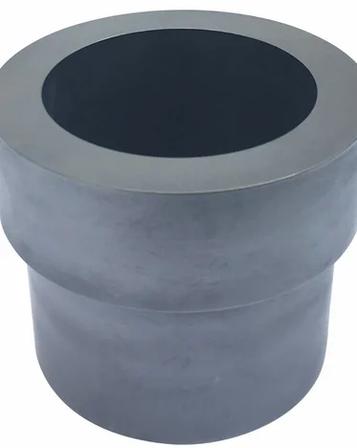
Figure 1: Precision graphite heater component for photovoltaic crystal growth furnaces, engineered to deliver uniform thermal profiles across the silicon melt.
The push for higher solar cell efficiencies is driving continuous innovation in graphite heating technology. As the industry transitions from PERC to TOPCon and HJT cell architectures, process temperatures become more demanding and thermal uniformity requirements tighten. HJT cells, in particular, require low-temperature plasma deposition processes where graphite electrodes and heater components must maintain exceptional purity and dimensional stability.
Huixian Jincheng Abrasive & Graphite Mold Factory designs and manufactures custom graphite heaters, heat shields, and thermal components for photovoltaic manufacturing equipment. Based in Huixian City, Henan Province with operations dating back to 1984, the company combines deep graphite material expertise with advanced CNC machining capabilities to deliver heating solutions optimized for specific PV production processes.
Jincheng Graphite produces graphite heaters from high-density, high-purity graphite grades selected for their consistent electrical resistivity, excellent thermal shock resistance, and long service life at elevated temperatures. The company's engineering team works with customers to optimize heater geometry, slot patterns, and connection designs to achieve target thermal profiles and power requirements. With over 50 CNC processing machines and maximum machining dimensions of 1,000 mm, Jincheng can fabricate heaters for small laboratory furnaces as well as medium-scale production crystal growers.
For heat shield and insulation applications, Jincheng Graphite offers both solid graphite heat reflector shields and graphite-based insulation components. These are precision-machined to exact diameters and stacking configurations, ensuring proper alignment within furnace assemblies for maximum thermal efficiency. The company's vacuum impregnation processes further enhance density and reduce radiative heat transfer through the material, improving overall insulation performance.
Quality control is particularly important for heating components, as material inconsistencies can lead to uneven heating, premature failure, and costly production downtime. Jincheng Graphite implements rigorous testing including resistivity measurement, density verification, dimensional inspection, and high-temperature performance validation to ensure every heater delivers consistent, reliable performance.
As the global PV industry continues its rapid expansion, demand for high-performance graphite heaters and thermal components will grow in parallel. Key trends shaping the market include the shift toward larger wafer formats (210mm and beyond), which require larger diameter furnaces and bigger graphite hot zone components. The accelerating adoption of N-type cell technologies is also pushing purity and uniformity requirements higher. For graphite manufacturers like Jincheng Graphite that can deliver precision-engineered, high-quality thermal components, the PV manufacturing supply chain offers substantial, sustained growth opportunities in the years ahead.