The global photovoltaic (PV) industry continues its explosive expansion, with annual solar installations breaking records year after year. Underpinning this growth is the sophisticated manufacturing supply chain that produces high-quality silicon wafers, and at the heart of silicon crystal production lie isostatic graphite crucibles and hot zone components. These precision graphite products enable the controlled growth of monocrystalline and polycrystalline silicon ingots, directly influencing wafer purity, production yield, and final solar cell efficiency.
The global specialty graphite market for photovoltaic applications was valued at USD 1,442.34 million in 2025 and is projected to reach USD 2,380.46 million by 2032, growing at a steady CAGR of 7.42%, according to PW Consulting analysis. Isostatic graphite accounts for the largest share of this market at 67.7%, as its uniform isotropic properties make it the gold standard for silicon crystal growth furnace components. Monocrystalline silicon puller applications represent the highest demand segment at 61.9%, reflecting the industry's ongoing shift toward higher-efficiency monocrystalline solar cell technologies including PERC, TOPCon, and HJT.
Graphite crucibles serve as the containment vessels for molten silicon during crystal growth, operating at temperatures of approximately 1,420°C for extended periods-often hundreds of hours per production run. In the Czochralski (CZ) method for monocrystalline silicon production, a quartz crucible holds the molten silicon, and this quartz crucible is itself supported and protected by an outer graphite crucible. The graphite crucible provides structural support at high temperatures, ensures uniform heat distribution around the melt, and protects the more fragile quartz crucible from thermal stress and mechanical damage.
Beyond crucibles, the entire hot zone inside crystal growth furnaces is constructed from specialty graphite components. This includes graphite heaters that generate the precise thermal profile required for controlled crystal solidification, graphite heat shields that manage thermal gradients and reduce energy consumption, graphite pedestals that support crucible assemblies, and various insulation components. Together, these graphite parts create the stable, uniform thermal environment that is essential for growing defect-free silicon crystals with consistent electrical properties.
The performance requirements for PV-grade graphite components are extremely demanding. High purity is paramount-ash content must be kept to very low levels to prevent contamination of the silicon melt, which would degrade solar cell efficiency. Isostatic graphite is preferred over molded graphite for these high-end applications because its 360-degree uniform pressing produces material with consistent density, strength, and thermal conductivity in all directions. This isotropy ensures uniform heating and predictable thermal expansion, minimizing thermal stress that could cause crystal defects or crucible cracking.
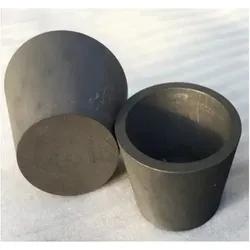
Figure 1: High-purity isostatic graphite crucibles designed for photovoltaic silicon crystal growth furnaces, providing structural support and uniform heat distribution.
The Asia-Pacific region dominates the global PV specialty graphite market with USD 1.04 billion in revenue, accounting for over 70% of global demand. This reflects the concentration of solar cell and wafer manufacturing in China, which produces more than 80% of the world's solar panels. Major Chinese PV manufacturers continue to expand capacity aggressively, driven by both domestic demand and booming export markets for solar energy equipment.
Huixian Jincheng Abrasive & Graphite Mold Factory brings over 40 years of graphite processing expertise to the photovoltaic supply chain, manufacturing high-quality graphite crucibles, heaters, heat shields, and custom hot zone components for silicon crystal growth furnaces. Founded in 1984 in Huixian City, Henan Province-one of China's historic graphite processing centers-the company has evolved alongside the PV industry, continuously upgrading its materials and processing capabilities to meet increasingly stringent solar manufacturing requirements.
Jincheng Graphite sources premium isostatic graphite and high-grade molded graphite raw materials for PV applications, selecting grades that balance purity, thermal conductivity, mechanical strength, and cost-effectiveness. The company's 50+ CNC machining centers enable precision fabrication of graphite components with maximum dimensions up to 1,000 mm, suitable for medium and large-scale crystal growth furnaces. Every component is machined to tight dimensional tolerances to ensure proper fit and alignment within furnace hot zone assemblies.
Multiple vacuum impregnation cycles are applied to enhance density and close internal porosity, further improving thermal uniformity and extending component service life. This is particularly important for graphite heaters and crucibles that undergo repeated thermal cycling, as reduced porosity minimizes thermal fatigue cracking and prevents silicon melt infiltration. The company also applies precision surface finishing techniques, achieving smooth, uniform surfaces that reduce particle generation and minimize contamination risk in the crystal growth environment.
With an annual production value of RMB 20 million, Jincheng Graphite serves as a reliable mid-tier supplier for PV equipment manufacturers and crystal growth workshops across China. The company's custom manufacturing capabilities allow it to produce graphite components based on customer drawings, accommodating specific furnace designs, crystal sizes, and process parameters. This flexibility has made it a valued partner for both established PV manufacturers and emerging solar technology developers.
As the PV industry continues to advance, graphite component requirements will continue to evolve. L diameter crystal growth furnaces demand larger, higher-strength graphite crucibles and heaters. N-type solar cell technologies (TOPCon, HJT) require even higher-purity graphite materials to maintain high minority carrier lifetimes. And continuous efforts to reduce manufacturing costs push graphite suppliers to improve component durability and extend service life. For Jincheng Graphite, ongoing investment in material science, process optimization, and machining precision will be key to capturing opportunities in the world's largest photovoltaic market.